Tuesday, 11 December 2018

Books of the Year

Our last post for this term is our annual 'books of the year' post, where staff and students recommend a book (or books) they've particular enjoyed this year. 


 Mr Roberts opted for All the Light We Cannot See by Anthony Doerr - the story of two children trying to survive during World War II: a young blind girl in Paris, and a German orphan boy. Their paths collide in this epic, enthralling and powerful novel, which has won numerous awards.


Thursday, 29 November 2018

Book of the Week

Frankenstein by Mary Shelley
Recommended by George Singellos

Frankenstein is at heart a story that tackles many moral and philosophical ideas as well as expressing its take on those issues through the revelations of Victor Frankenstein, from his desire to his disgust, the reaction of the townspeople and the consequences they have for his creation. 


On the surface, the novel is a dramatic and thrilling horror story, filled with tragedy, murder and despair, all of which make it both exciting and chilling when reading.


Friday, 23 November 2018

Director's Notes on My Fair Lady

Mr Anthony

Gabriel Pascal, the film producer originally responsible for adapting Pygmalion for the screen, first met George Bernard Shaw in the nude.


Sometime in the 1920s, Pascal was swimming without trunks on the French Riviera when he saw a skinny, naked man with a long white beard holding on to a buoy. Shaw commented on the golden brown of Pascal’s buttocks and Pascal asked, as a struggling film producer, if he might produce an adaptation of one of Shaw’s plays. Shaw replied that he would only grant such a favour if one day Pascal were 'utterly broke'.

Tuesday, 20 November 2018

Book of the Week

The Tattooist of Auschwitz by Heather Morris
Recommended by Henry Drewitt-Jones

Before I consider this book, I feel it is my duty to tell you that I am a 14 year old.  I am far from emotional maturity and yet this novel brought me to tears.


The Tattooist of Auschwitz is a stunningly written portrayal of the true story of Lale Sokolov.  It follows his path into Auschwitz and eventually, luckily for him, out of it.  Lale's story is a near impossible one to summarise - in my copy it took the author 267 pages to explain it fully: to explain it, I must delve into the character of the protagonist, which Heather Morris does so brilliantly.  Lale's character takes the best-seller through a tale of heroism and strength, horrifying deeds and pain, but also survival: it really shows you an individual war. 

Wednesday, 7 November 2018

Book of the Week

The Prince by Niccolo Machiavelli
Recommended by Alexandre Vecchioli

Authored by Niccolo Machiavelli at a time of significant political upheaval, The Prince sought to address the political and ethical dilemmas faced by Renaissance rulers.


Machiavelli saw a need to advise leaders of Italian states, by mean of a political treatise, in the effective application of political policy and in the process delivered one of the most significant milestones in the history of political thought.  In pre-Machiavellian thought, ethics and politics converge.  Plato's Republic, for instance, propounded the view that these two ideals were inseparably connected.  The separation of these two subjects created a less philosophical and more pragmatic approach to political science.

Wednesday, 31 October 2018

Classic Ghost Stories for Hallowe'en ...

If the Strictly Halloween Special and Eastenders Halloween Week are the wrong kind of scary for you, here’s an alternative: some classic ghost stories to set your spine tingling and make your hair stand on end.  No lurid John Landis makeovers or psychotic stallholders - just simple stories to make you shiver …


Friday, 12 October 2018

And the (SPS) Booker Prize Winner is ...

At last night's Predict the Booker Prize evening in the Kayton Library, four Pauline advocates - Sebastian Rodgers, Conor Sinnott, Rufus Law, Will Reith - and the school's librarian, Ms Cummings, put the case for their chosen book from the Booker shortlist.  With Mr Hollands acting as compère, each speaker introduced their novel, and gave a critical overview of its strengths and themes, before reading an extract and fielding questions from the audience.


Monday, 1 October 2018

Predict the Booker Prize-Winner!

Miss McLaughlin

Last week the short list for the Man Booker Prize 2018 was announced. To mark this annual event, this year at St Paul’s we are launching a shadowing event where six boys in the 8th form will be taking on one book each, reading them and then coming together to make a case as to whether their book should be the winner of this prestigious award.


Their debate will be held in the Kayton Library on 11th October at 6pm. Students, staff and parents are invited to join the event, whether or not they have read all, or indeed any, of the shortlist.


Keen to get involved? Last week on the Book Blog, Mr Hager offered some comment on each of the shortlisted texts. It would be great to have students (and staff and parents) at the event who have read some of the texts in contention. You can buy all six at TheBookPeople’s website or pop in to the library to borrow a copy (we have a limited supply- they are selling out!).


Following the debate and discussion we will have a vote on which book we think will win the prize. The real winner will be announced the following week and we will see if we were correct.  Join us in the Kayton Library on 11 October at 6pm - RSVP using the link provided - https://www.trybooking.co.uk/GGD

Hope to see you there!

Friday, 21 September 2018

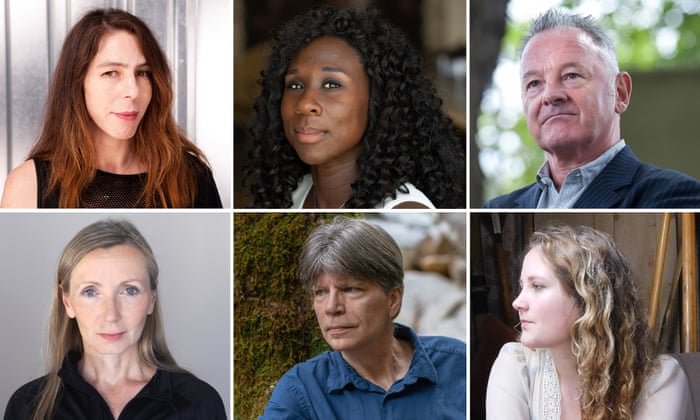
Man Booker 2018 Shortlist Revealed!


This year's Man Booker Prize shortlist has been revealed, so now is the perfect time to go online and order six books to read between now and the end of Remedy.  Why not go to TheBookPeople's website where you can buy all 6 books for £40?

This year's list is supposed to reflect the 'dark times' that we live in, so prepare yourself for some powerful and thought-provoking reads.

One of the judges has described every single book as a 'miracle of stylistic invention', so there's no excuse not to read every single one of them.

Will any of these be as good as last year's winner, Lincoln in the Bardo?  Have a look at the blurbs below to see if any of them take your fancy, or visit the Man Booker Website to find out more.

Everything Under (Daisy Johnson)
At 27, Johnson is the youngest ever shortlisted author.  She writes about a troubled mother-daughter relationship and reimagines Greek mythology in the modern world.

The Mars Room (Rachel Kushner)
Romy Hall is facing two consecutive life sentences, plus six years, at Stanville Women's Correctional Facility.  The future is looking bleak until news from outside brings a new urgency to her existence, challenging her to escape her own destiny.

The Overstory (Richard Powers)
A novel told in 'concentric rings of interlocking fable' about trees.  It ranges from antebellum New York to the late 20th Century Timber Wars of the Pacific Northwest.

Milkman (Anna Burns)
The protagonist of the novel lives in a world where to be interesting is dangerous.  She does her best to hide the details of her life from her mother, and hides an encounter with the Milkman from everyone.  Until her first brother-in-law finds out and things get interesting, and dangerous.

Washington Black (Esi Edugyan)
Escape is only the beginning.  From the brutal cane plantations of Barbados to the icy wastes of the Canadian Arctic, from the mud-filled streets of London to the eerie deserts of Morocco, Washington Black is the tale of a world destroyed and the search to make it whole again.

The Long Take (Robin Robertson)
A D-Day veteran has PTSD.  Unable to return home to rural Nova Scotia, he seeks refuge in the city.  Ranging from New York to LA to San Francisco, the novel explores 'the crucial period of fracture of in American history, one that also allowed film noir to flourish'.

Friday, 14 September 2018

What the Modern Man is Reading

5EN.F have put together a reading list of books they have enjoyed this year. It is an excellent list.

The book I read over the summer is called A Thousand Splendid Suns, by Khaled Hosseini. It is about the hardship of women in Afghanistan during its civil war. The book is written powerfully and really shows the brutality that women and children had to endure. Khaled Hosseini (who also wrote The Kite Runner) really infuses emotions throughout the story. I would really recommend this book as it is a great read and is also extremely entertaining. - Kush Gupta


Tuesday, 11 September 2018

Book of the Week

Sabrina by Nick Drnaso
Recommended by Mr Kemp

I have been really impressed with this. But I’m not convinced that it’s the masterpiece that some people have been suggesting. This is the first graphic novel to be long-listed for the Booker Prize, and so it has perhaps predictably garnered quite a lot attention from the broadsheets. Indeed, my copy took about a month to arrive because the publishers hadn’t anticipated such a wide interest.


Friday, 7 September 2018

Some Suggestions for Book Bingo

If you've taken up this term's book bingo challenge, the English Dept thought it might help you out with a few suggestions for each of the categories. So here are a few titles we think you might enjoy in some of the 'bingo' categories (and obviously, all our suggestions fit the 'book suggested by a teacher category'!). 

Tuesday, 4 September 2018

Book of the Week

Home Fire by Kamila Shamsie 
Recommended by Miss McLaren 

Home Fire opens as Isma Pasha, a young British student, is detained for three hours by airport security on her way to the US. She's guilty of that heinous contemporary crime, travelling while Muslim. As her belongings are searched, and her laptop scrutinised ('googling while Muslim' is an even worse offence), her interrogators demand 'her thoughts on Shias, homosexuals, the Queen, democracy, the Great British Bake Off, the invasion of Iraq, Israel, suicide bombers, dating websites'. Above all, they want her to answer one question - does she consider herself British?


Thursday, 30 August 2018

Welcome Back!

Here at the book blog, we hope you've all had a great summer! Today's post is an introduction to the blog, for those of you who are new to the school - telling you a bit more about what it does, and how you can get involved.


Monday, 25 June 2018

Final Post ...

Sadly, this term we say goodbye to Miss Good, Dr Hudson and Mr Young - but they very kindly agreed to answer the book blog's leavers' questionnaire before departing.

What were you reading when you were a teenager?
Miss Good:To Kill a Mockingbird by Harper Lee


Dr Hudson: Aged 13 and 14, mostly Marvel comics. I collected them and had complete sets of all the major titles. I have just depressed myself by checking how valuable one of the comics I then owned would now be: Amazing Fantasy No.15, the first appearance of Spider Man, apparently sold seven years ago at auction for $1.1! I bought it for half a crown (12½ p) – that price including a few others – at a second-hand bookshop in Aldershot in 1969.


I also had a copy of each of the original Incredible Hulk series, which ran to only six issues. I sold the lot when I was 15 in order to buy a guitar amp. And I started reading proper books, too, beginning – as I recall – with Great Expectations. Moral of the story? If you want to be rich, kids, keep away from Rock and Roll and Dickens.
 Mr Young: Well, I have to admit that I tended to prioritise playing sport of any kind during my teenage years but did get stuck into a few books by the saints – St Basil's On the Making of Man, St Bonaventure's The Soul's Journey into God, etc.


I also loved the Chronicles of Narnia and then later on moved onto reading arguments for and against God - The God Delusion by Richard Dawkins, God is not Great by Christopher Hitchens, The Rage against God by Peter Hitchens, Straw Dogs by John Gray, There is a God by Anthony Flew.

Friday, 22 June 2018

The Women's Prize for Fiction: some summer reading suggestions

Miss McLaughlin

Early in June, Kamila Shamsie was announced as the winner of the 2018 Women’s Prize for Fiction with her seventh novel Home Fire.


Of the shortlist, the 2018 Chair of Judges Sarah Sands, said: “This was a dazzling shortlist, it had depth and richness and variety. We were forcibly struck by the quality of the prose. Each book had its champions. We loved the originality of mermaids and courtesans, we were awed by the lyrical truth of an American road trip which serves as a commentary of the history of race in America, we discussed into the night the fine and dignified treatment of a woman’s domestic abuse, we laughed over a student’s rite of passage and we experienced the truth of losing a parent and loving a child. In the end we chose the book which we felt spoke for our times. Home Fire is about identity, conflicting loyalties, love and politics. And it sustains mastery of its themes and its form. It is a remarkable book which we passionately recommend.”


In the half term, I read one of the shortlisted works. Imogen Hermes Gower’s The Mermaid and Mrs Hancock is set in Georgian London and presents a transactional world where everything from wonders and women’s affections are monetised and mythicised. Mr Hancock is a Merchant who, after finding his ship exchanged for a curiosity, is swept into the world of up-scale brothels full of high class men, showmanship and gaudy extravagance. As the novel moves into magic realism and weaves a plot around Angelica Neal – a beautiful, vain and immoral courtesan - and Jonah Hancock, the reader is led through parlours, brothels, coffee shops and dockyards and comes face-to-face with marvels. Imogen Hermes Gower’s prose shimmers (forgive me), mermaid-like and is, in fact, so subtle and engaging that, by the time we are faced with one, we too believe in the strange rolling mermaid held in a salt-water tank.


Imogen Hermes Gower studied Archaeology, Anthropology, and Art History and went on to work in museums. She gained plaudits for her short stories based on the artefacts she worked with and this, her debut novel, also based on an object, is the product of her work begun whilst completing an MA in Creative Writing.


Hers was one of six books on the short list for The Women’s Prize for Fiction, announced in April, the full short list being:

Elif Batuman, The Idiot
Imogen Hermes Gowar, The Mermaid and Mrs Hancock
Jessie Greengrass, Sight
Meena Kandasamy, When I Hit You: Or, A Portrait of the Writer as a Young Wife
Kamila Shamsie, Home Fire
Jesmyn Ward, Sing, Unburied, Sing

You can read an interview with Imogen Hermes Gower here and an extract from her novel here.  

You can find out more about the prize here, and website has usefully created a page full of suggestions for your next read.

This year's judges:
Imogen Stubbs, Katy Brand, Catherine Mayer, Sarah Sands and Anita Anand. 

Wednesday, 20 June 2018

Pandaemonium 2018

This term's issue of Pandaemonium, the SPS creative writing magazine featuring stories and screenplays by a range of current Pauline writers will be published on Friday: click here for a preview.


The magazine will be distributed during afternoon tutors.  If you'd like to get involved with the magazine, or submit any writing or art-work for the next issue, just e-mail Mr Gardner at mtg@stpaulsschool.org.uk


Tuesday, 19 June 2018

Book of the Week

1984 by George Orwell
Recommended by Kiyo Brandreth-Stroud

'Ignorance is strength' is the last line of the motto in the novel 1984, a dystopian novel written in 1949 by the author George Orwell, famous for his book, Animal Farm. This book is famous for its many underlying messages and is interesting on many levels.


The book was written just a few years after the horrors of World War Two and only twenty five years after the Russian revolution. The Labour party is in power and Orwell is in despair, driving him to write this book reflecting his inside emotions.

Friday, 15 June 2018

An Extract from 'Cheating Death'

Today's post is introduced by its author, Charlie de Waal:

'This extract is the opening chapter of a novel I planned and developed extracts from for my EPQ. It emulates some of the style of Sir Terry Pratchett, who is undeniably my favorite author (if you look back in book blog history you’ll see me defending him against J.K Rowling) and who has significantly influenced my writing style to be what it is today.


My EPQ centred around developing character building, in particular exploring and expanding upon Pratchett’s take on the Grim Reaper, Death. This story depicts the process my character of Death goes through to collect someone’s soul. I hope you enjoy it, and I thoroughly recommend any and all of Terry Pratchett’s books.'

Tuesday, 12 June 2018

Book of the Week


To Kill a Mockingbird by Harper Lee
Recommended by Claudius Wheeler

This novel is based around early 20th century Alabama, in Maycomb county. It was written by an author famous for this single novel called Harper Lee and is narrated by a girl named Scout, whose experiences relate to Lee’s childhood, having been brought up around this area at the same time the novel is set in. The title is taken from the wise words of her father, Atticus Finch: 'mockingbirds don’t do one thing but make music for us to enjoy… it’s a sin to kill a mockingbird.'


The plot of the novel is Scout and her brother Jem living their everyday life in Maycomb county, while their father, who is a lawyer, ends up early in the novel defending a black man, Tom Robinson, falsely accused of raping a woman, in a court appeal.  As the word of this spreads across the racist county, Jem and Scout become subject to names at school that they can’t quite grasp but understand they are insults to their father.  Despite the pressure, they must restrain themselves from violence to these other children and people, although this is not always kept. The novel generally focuses on Scout, the younger sibling, through whom Lee portrays a vision of youth and humour in her actions as a six-year-old girl, but also keeps in the background the story of racial injustice. Scout has a childish perspective of this that can be ironic, which shows how such a serious matter is viewed through the eyes of an immature child, which also expresses the humour of Scout’s character as well.

Friday, 25 May 2018

'The Papers': a short story

As well as book reviews, from time to time, the blog publishes creative writing.  For instance, you can find the junior creative writing magazine, Pandemonium, here and here - as well as past editions of the senior publication, Areo - with the June 2017 issue here, and the 2016 issue here.  We've also featured stories by staff - such as 'Frank's Last Invigilation', by Mr O'Keeffe (formerly of the English Dept), and by pupils - among them the L8th formers who've chosen creative writing for their extended project: for instance, Alex Jacobs's short story, 'Avarice'

Today, we have a short story by Yang Hsu, who introduces it as follows:

This was the first story I wrote for my extended project. Implied to be set in the early 20th century, it tells the story of a Duchess, who, several years prior to the time of the story, was involved in an unspecified ‘incident’ (some sort of scandal or affair). Evidence of her involvement, in the form of papers, has now made its way into the hands of another person, Winston Blenthorpe, who uses this as blackmail to extort money from her to fund his own extravagant lifestyle.


I was inspired by the writings of Saki, who often focussed on people of a similar social class and time as my own story, examining their petty squabbles and interactions. I found writing this story a new and very positive experience and I hope you enjoy reading my story as much as I enjoyed writing it.'

Tuesday, 22 May 2018

Book of the Week

A Country Doctor’s Notebook by Mikhail Bulgakov 
Recommended by Leo Odgers

A Country Doctor’s Notebook is a semi-autobiographical novel by Mikhail Bulgakov which recounts his life as a doctor before he became a writer.


The book is in six chapters: ‘The Embroidered Towel’, ‘The Steel Windpipe’, ‘Black as Egypt's Night’, ‘Baptism by Rotation’, ‘The Blizzard’ and ‘The Vanishing Eye’. The chapters lend themselves well to the style of the book as it feels more like memories - memories are always wrapped around events of note. It feels like you’re getting the best bits of his life as a doctor.

Friday, 18 May 2018

The Man who was Chesterton ...


What are we to do about G K Chesterton? The most famous Old Pauline novelist, he is renowned for his Father Brown detective stories, dramatisations of which have just reached their sixth series on BBC One. For Chesterton these were primarily a money-spinner; what really interested him was argument, whether political, theological or literary, a passion which was born during his time at St Paul’s, where the library’s fascinating archive shows him to have been an enthusiastic speaker at formal dinners and a keen debater, even editing a journal under that title.


Pictures of him abound on English-classroom walls: six-foot-four, so obese that his coffin had to be lowered out of his bedroom window, and dressed in cape, pince-nez and broad-brimmed hat with a trusty sword-stick by his side – the epitome of the Edwardian intellectual with larger-than-life persona.


Tuesday, 15 May 2018

Book of the Week

The Rotters’ Club by Jonathan Coe
Recommended by Alex Marshall

The Rotters’ Club was written by English novelist Jonathan Coe in 2001 and is set in 1970s Birmingham around the time of the IRA conflict, mining strikes and three-day week, car industry strikes and general industrial unrest.


The book is drawn from experiences during Coe’s time at school in the 1970s and the plot revolves around a group of friends at King William’s school and their experiences of growing up. Introduced by Sophie, the niece of the protagonist, some thirty years later, a more modern and nostalgic point of view is evident through the use of various narrators and perspectives throughout the book.

Friday, 11 May 2018

An Interview with the New Librarian

In this post, we are delighted to welcome Ms Cummings, the school's new librarian, who very kindly took the time to answer some of the book blog's questions. 

What are your first impressions of SPS and Paulines?
What lovely people!


Have you always been a librarian?
My first career was as a Transport Manager for a big parcel company. Then I decided to retrain and went back to university, got my librarianship qualifications and started working in university libraries. I moved into school libraries when I lived in China.

Tuesday, 8 May 2018

Book of the Week

The Scarlet Pimpernel by Baroness Orczy
Recommended by Isaac Wighton

Having set the premise of a masked vigilante that inspired household names such as Batman and the famed Blackadder episode Nob and Nobility (which prompted the re-read that lead to this review), Baroness Orczy’s The Scarlet Pimpernel (1905) is a must read classic, the influence of which still resonates in culture today. I expect it to be a while before I read a classic with an equally fabulous mix of romance, betrayal and suspense and a protagonist as swashbuckling and enigmatic as that of Orczy’s magnum opus.


Friday, 4 May 2018

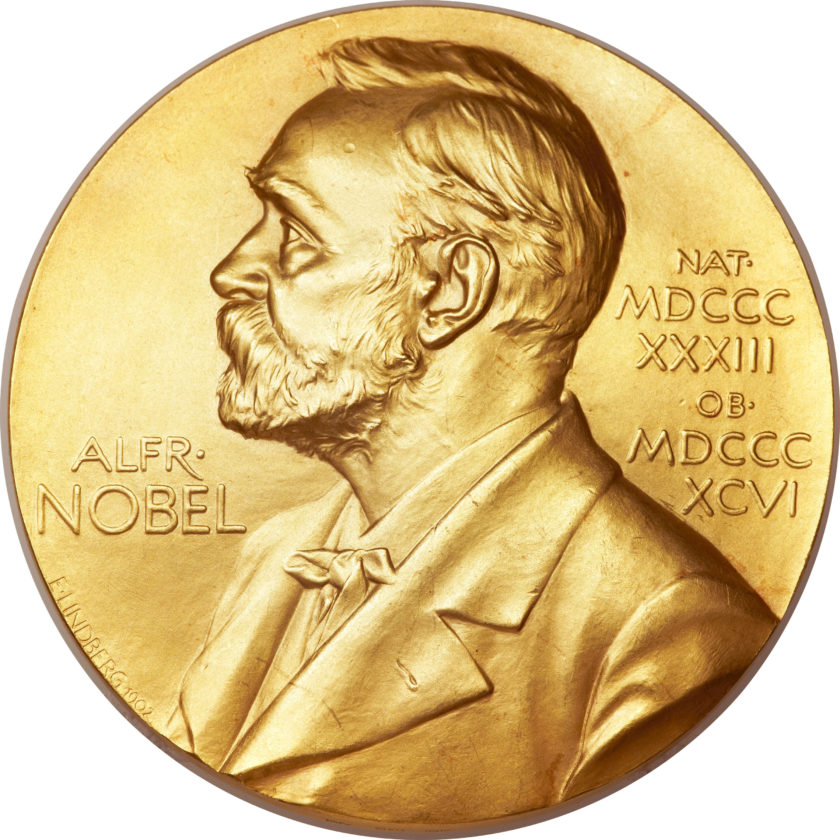
Nobel Prize for Literature postponed until 2019


Image result for nobel prize literature

The secretive committee that decides upon the winner of the Nobel Prize has revealed today that it will not be announcing a winner in 2018.  This is due to a scandal that has rocked the committee and caused numerous members to resign in protest at the conduct of a man with whom the committee is associated.  The postponement of the award is a measure designed to restore confidence in the Nobel committee, and an attempt to ensure the longevity of the prize itself.

This means that there will be two winners in 2019.  The committee's processes are notoriously secretive, but the winner is the work who is best deemed to fulfil Alfred Nobel's vision of "the most outstanding work in an ideal direction."  In 2016, this was considered to by Bob Dylan, and last year's winner was the less controversial Kazuo Ishiguro.  Who do you think should be considered in 2019?  The book blog would love to hear your views.

In the meantime, why don't you have a look at the list of past winners if you're looking for reading inspiration for the summer?

https://www.nobelprize.org/nobel_prizes/literature/laureates/


Tuesday, 1 May 2018

Book of the Week

Death and the Penguin by Andrey Kurkov (2001)
Recommended by Mr Hager

Set in post-Soviet Kiev, this is a novel that explores the chaos of the new world order through a central character who finds himself writing obituaries that start to seem more like death sentences for the mafia figures they discuss.


Victor is a struggling writer who can’t get his work published because it lacks the appropriate level of sensation, so writing obituaries is a fitting way to signal the stagnation of his own career. Ironically, his work has never been so alive, and the novel explores the interplay between life and art in a playful and thrilling way, whilst also packing in the necessary thrills of a gangster novel.

Friday, 27 April 2018

Book-Writers

Dr Hudson

Now, I know this is stretching a point rather, but as this is a book blog I thought I might write about book-writers. Not the writers of books we read in English lessons, though; the book-writers I have in mind are writers less well-known than the other writers with whom they work, the writers of the music and the writers of the lyrics.

Yes, I’m talking about scripts for musicals, known as libretti to the cognoscenti and to the rest of us as the ‘books’.


You may know, for instance (although you may not) that the music and lyrics for Into the Woods and Sweeney Todd, the Demon Barber of Fleet Street were written by the great Stephen Sondheim but did you know that the book for the former was written by James Lapine and the latter by Hugh Wheeler? And did you know that Sondheim regularly says in interview that first and foremost in the composition of a good show is the book?

Tuesday, 24 April 2018

Book of the Week

Havisham by Ronald Frame 
Reviewed by Dr J Hudson 

Have you read Great Expectations? If you haven’t, you should. In fact, I would go so far as to say, you must. A fellow English teacher who has since joined the priesthood once remarked to me that every boy deserves to read Great Expectations, and I agree.


Our culture is informed by Charles Dickens’s monumental work: the New-Zealand writer Lloyd Jones uses it significantly in his Mr Pip; Australian novelist Peter Carey writes about one of its characters; the poet laureate has a poem about another; there is at least one opera inspired by it. Indeed, this review is arguably more about that great book than it is about this back-story piece by prize-winning novelist and dramatist, Ronald Frame.

Friday, 20 April 2018

Happy Birthday, Shakespeare!

Next Monday, April 23rd, it will be 454 years since the birth of William Shakespeare.


Although we don't know for certain when Shakespeare was born, records of his baptism on 26th April, 1564 survive, and so a birth-date slightly earlier doesn't seem implausible, even if it may have originated in a clerical error which confused the writer's date of death - 23rd April - with his date of birth. The convenient coincidence that April 23rd is also St George's Day seems to have strengthened the tradition, so England can celebrate its greatest playwright and its patron saint simultaneously.


In today's blog post, Theo Mahon explains why he thinks Shakespeare is still an important writer for today's world.

Tuesday, 17 April 2018

Book of the Week

The Martian by Andy Weir 
Recommended by Aidan Lim

Becoming an astronaut is every child’s dream. In the future, NASA launch a mission to explore the mysteries of our neighbouring planet, Mars.


After months of intense testing, Mark Watney, a botanist from Chicago, is chosen as part of the Ares 3 expedition to explore possibilities of life upon Mars. Luck is not on his side, however, as he ends up stranded on the planet with no way of contacting Earth. He has limited supplies, fragile equipment and no way of letting everyone know he’s still alive.


This book is full of suspense and surprises, with danger and death at every turn. Rescuing a single man 55 million kilometres away has never happened before, and this book shows that strength and determination are key in achieving the impossible. I would recommend this book to fans of science fiction and those with an interest in the ‘red planet’. It is a gripping thriller, while also being emotional and extremely witty.