The last word on the book blog this year goes to Mr Joy, who, sadly, is leaving SPS at the end of this term, but was kind enough to answer the book blog's questionnaire before departing.
What were you reading when you were a teenager?
A lot of history, with more than a smattering of: crime; legal; action,‘thrillers’!
Wednesday, 13 December 2017
Tuesday, 12 December 2017
books of the year
Looking for something to read over the holidays? You've come to the right place - it's the book blog's annual 'books of the year' post. We asked people to nominate the books they'd most enjoyed this year, fiction or non-fiction, or both, and here are the results: many thanks to all those who contributed, and happy reading!
Friday, 8 December 2017
Monday, 4 December 2017
Book of the Week
Recommended by Kit Treadwell
Few things in life are worth a 17 year wait. I can say that with some certainty- I haven’t actually been alive for 17 years, and nothing has turned up yet. Nothing, that is, until the 19th October this year. “'Oumuamua!” I hear you cry, “the first interstellar object to ever be identified!” Well, interesting, but no. I am of course referring to Philip Pullman’s La Belle Sauvage, the long awaited (emphasis on long) sequel, or as it turns out, prequel, to the His Dark Materials trilogy.
Wednesday, 29 November 2017
Lady Brett Ashley: A Hemingway Anachronism
by Ben Ballard
The ‘roaring twenties’ are often seen as the coming of age for women, who were liberated to wassail and flaunt their sexuality. Despite its contrasting intentions, the Prohibition era in the United States saw the transformation of women across the United States; the 1920s woman smoked, drank, voted and cut her own hair. However, this salvation of female sensuality became only another reason for 1920s men to condemn the nature of women to the core. These notions of misogyny were inherited by contemporary popular culture and particularly by the male-dominated field of literature. Critically-acclaimed authors such as T.S Eliot, Sherwood Anderson and F. Scott Fitzgerald harnessed a wide range of ‘femme fatale’ or just simply ‘bitch’ female characters in their work to express their misogynistic views but no author epitomised this era of chauvinist literature quite like Ernest Hemingway.
Tuesday, 28 November 2017
Book of the Week
A Very Expensive Poison by Luke Harding
Recommended by Zack Colton
Polonium. Russia. MI6. In 2006, two KGB members assassinated a Russian informant, called Alexander Litvinenko, in a hotel in Mayfair. They used a highly rare and highly reactive substance called polonium, produced almost exclusively in Russia, which causes unknown and highly shocking effects. As a true story, this book is action-packed and perfectly written, with the exact balance of history and current events to keep it enticing and shocking.
Thursday, 23 November 2017
Can Rap Be Considered Poetry?
Rob Norris
Rap has always operated in an undefinable grey area, half in poetry, half in music. Its roots can be traced back to Africa, centuries before hip-hop existed, when the griots of West Africa would deliver stories rhythmically over a simple instrumental compromised of traditional drums and sparse instrumentation. Rap has since evolved, incorporating jazz and other genres before modern hip hop was born.
Here is the first argument as to why rap can never be poetry. Since its conception, rap has always been paired with the musical backing. Had the music been added later, then there is an argument to be made that rap is just a natural evolution of pure poetry. However, since there has been a clear separation from the beginning, there remains a distance between the art forms. A rapper cannot write a song and remove the music and call it poetry, in the same way a poet cannot add music to a poem and call it rap.
Rap has always operated in an undefinable grey area, half in poetry, half in music. Its roots can be traced back to Africa, centuries before hip-hop existed, when the griots of West Africa would deliver stories rhythmically over a simple instrumental compromised of traditional drums and sparse instrumentation. Rap has since evolved, incorporating jazz and other genres before modern hip hop was born.
Here is the first argument as to why rap can never be poetry. Since its conception, rap has always been paired with the musical backing. Had the music been added later, then there is an argument to be made that rap is just a natural evolution of pure poetry. However, since there has been a clear separation from the beginning, there remains a distance between the art forms. A rapper cannot write a song and remove the music and call it poetry, in the same way a poet cannot add music to a poem and call it rap.
Tuesday, 21 November 2017
Book of the Week
When Breath Becomes Air by Paul Kalanithi
Recommended by Isaac Wighton
On the verge of completing a decade’s worth of neurological training, Paul Kalanithi had examined hundreds of CT scans. This one was especially bad: 'the lungs were matted with innumerable tumours, the spine deformed, a full lobe of the liver obliterated. Cancer, widely disseminated.' What made it worse was that this was not a patient’s scan. It was his own.
At 36, Kalanithi had led a glittering academic career. Holding degrees in English literature, human biology and history and philosophy of medicine, graduating from Yale School of Medicine, winning the coveted American Academy of Neurological Surgery's highest award for research and very nearly completing years of training in Neurosurgery, the future was most definitely bright for Paul. This made the discovery that he had type IV inoperable lung cancer even more painful.
Recommended by Isaac Wighton
On the verge of completing a decade’s worth of neurological training, Paul Kalanithi had examined hundreds of CT scans. This one was especially bad: 'the lungs were matted with innumerable tumours, the spine deformed, a full lobe of the liver obliterated. Cancer, widely disseminated.' What made it worse was that this was not a patient’s scan. It was his own.
At 36, Kalanithi had led a glittering academic career. Holding degrees in English literature, human biology and history and philosophy of medicine, graduating from Yale School of Medicine, winning the coveted American Academy of Neurological Surgery's highest award for research and very nearly completing years of training in Neurosurgery, the future was most definitely bright for Paul. This made the discovery that he had type IV inoperable lung cancer even more painful.
Friday, 17 November 2017
Books vs e-Books
Luke Jopling
In the constantly-changing modern world, there are times where we all just want to step back, relax, and enjoy reading a good book that takes you to another world. One where you can forget all your issues, decisions, and other important matter and focus on the life within the book.
In recent years this old-fashioned, calming, and simple practice has been changing. More and more people are no longer reading a book when they want to get away from our modern world and the technology that comes along with it: instead, they are using technology to read a book. But is this good or bad?
In the constantly-changing modern world, there are times where we all just want to step back, relax, and enjoy reading a good book that takes you to another world. One where you can forget all your issues, decisions, and other important matter and focus on the life within the book.
In recent years this old-fashioned, calming, and simple practice has been changing. More and more people are no longer reading a book when they want to get away from our modern world and the technology that comes along with it: instead, they are using technology to read a book. But is this good or bad?
Monday, 13 November 2017
Book of the Week
Cloud Atlas by David Mitchell
Recommended by Sam DeMarco
This week’s recommendation for Book of the Week is one that lies very close to my heart: Cloud Atlas by David Mitchell. I first read it a few years ago, but since then, I have found myself drawn back to it, and such is the nature of the book that every re-read presents something new and rewarding.
Friday, 10 November 2017
English Society
Orlando Strachan
Friends, Paulines, countrymen, lend me your ears. You may or may not be aware of the prestigious English Society. A gathering of only the most esteemed academics during a Wednesday lunchtime (normally at 1:15, check the posters) to debate and ponder modern (and ancient) literary conundra. But mainly just to eat pain au chocs.
Tuesday, 7 November 2017
Book of the Week
The Ride Down Mount Morgan by Arthur Miller
Recommended by Robert Brewer
This short play by legendary playwright Miller is about Lyman Felt, a man who has lied all his life, coming face to face with his two wives at the same time, for the first time.
The play circles around Lyman, confined to a hospital bed, forced to reveal the truth to his wives. Theo - the first wife of over 20 years - stable, genuine, and the mother of Lyman’s child Bessie, and Leah - young, attractive, and restless.
Recommended by Robert Brewer
This short play by legendary playwright Miller is about Lyman Felt, a man who has lied all his life, coming face to face with his two wives at the same time, for the first time.
The play circles around Lyman, confined to a hospital bed, forced to reveal the truth to his wives. Theo - the first wife of over 20 years - stable, genuine, and the mother of Lyman’s child Bessie, and Leah - young, attractive, and restless.
Friday, 3 November 2017
In Defence of the Novel?
Dr Hudson
Jane Austen appears on the new ten-pound note with the quotation, ‘I declare after all there is no enjoyment like reading’ emblazoned beneath her picture.
The line comes from Pride and Prejudice and is – as many commentators have pointed out – spoken by a character who is merely pretending, and actually has no interest in reading at all. We might look to another of her works, Northanger Abbey, only published after her death but written early in her career, to see a more detailed discussion of novels and reading.
Jane Austen appears on the new ten-pound note with the quotation, ‘I declare after all there is no enjoyment like reading’ emblazoned beneath her picture.
The line comes from Pride and Prejudice and is – as many commentators have pointed out – spoken by a character who is merely pretending, and actually has no interest in reading at all. We might look to another of her works, Northanger Abbey, only published after her death but written early in her career, to see a more detailed discussion of novels and reading.
Tuesday, 31 October 2017
Book of the Week (or not): How to Stop Time
Dr Hudson
Trust me. My opinion is impartial, so you can. That’s not to say, of course, that I don’t have partiality, as in things that are to my taste. I’m partial to books about Shakespeare, for instance, and to narratives that engage me emotionally. But that kind of partiality is not that same as being actually biased. And when we read book reviews, especially those in the national press, it is difficult to find an impartial reviewer.
Recently I read How to Stop Time by Matt Haig. I chose to read it because I read a good review, which told me it featured Shakespeare and was touching, in The Guardian. I often find myself sharing the opinions of journalists who write for that newspaper. However, what I forgot is that book reviews tend not to be written by professional journalists but by other authors, and it’s not always clear whether or not they know personally the author whose work they review.
Trust me. My opinion is impartial, so you can. That’s not to say, of course, that I don’t have partiality, as in things that are to my taste. I’m partial to books about Shakespeare, for instance, and to narratives that engage me emotionally. But that kind of partiality is not that same as being actually biased. And when we read book reviews, especially those in the national press, it is difficult to find an impartial reviewer.
Recently I read How to Stop Time by Matt Haig. I chose to read it because I read a good review, which told me it featured Shakespeare and was touching, in The Guardian. I often find myself sharing the opinions of journalists who write for that newspaper. However, what I forgot is that book reviews tend not to be written by professional journalists but by other authors, and it’s not always clear whether or not they know personally the author whose work they review.
Thursday, 12 October 2017
Reading Queer: Talking Queer
For our final post, we're featuring Mr Anthony's introduction to the devised drama piece, Talking Queer, which is being staged this week.
For a black girl walking white streets, home may be the one destination where the minority becomes the majority; for a Muslim boy in a Christian community, his family may prove a fortress from an intolerant society; for a young woman exposed to misogyny, her family tree may provide women with whom she may seek solace.
Reading Queer: Christopher Isherwood
Mr Gardner
'Waking up begins with saying am and now. That which has awoken then lies for a while staring up at the ceiling and down into itself until it has recognized I, and therefrom deduced I am, I am now. Here comes next, and is at least negatively reassuring; because here, this morning, is where it has expected to find itself: what's called at home.
But now isn't simply now. Now is also a cold reminder: one whole day later than yesterday, one year later than last year. Every now is labeled with its date, rendering all past nows obsolete, until--later or sooner-- perhaps--no, not perhaps--quite certainly: it will come.
'Waking up begins with saying am and now. That which has awoken then lies for a while staring up at the ceiling and down into itself until it has recognized I, and therefrom deduced I am, I am now. Here comes next, and is at least negatively reassuring; because here, this morning, is where it has expected to find itself: what's called at home.
But now isn't simply now. Now is also a cold reminder: one whole day later than yesterday, one year later than last year. Every now is labeled with its date, rendering all past nows obsolete, until--later or sooner-- perhaps--no, not perhaps--quite certainly: it will come.
Tuesday, 10 October 2017
Reading Queer: Alison Bechdel
Mr Kemp
Alison Bechdel’s rather parlous day job from 1983-2008 was the comic strip Dykes to Watch Out For, a long running series about a large cast of (predominantly gay) women living in the US.
It’s been hailed as groundbreaking for its frank and witty presentations of lesbian lifestyles, and the Omnibus is on my Christmas list. It’s also got, for my money, one of the best titles of any literary work I’ve ever heard.
Alison Bechdel’s rather parlous day job from 1983-2008 was the comic strip Dykes to Watch Out For, a long running series about a large cast of (predominantly gay) women living in the US.
It’s been hailed as groundbreaking for its frank and witty presentations of lesbian lifestyles, and the Omnibus is on my Christmas list. It’s also got, for my money, one of the best titles of any literary work I’ve ever heard.
Reading Queer: Christopher Marlowe's Hero and Leander
Blazoning Forth the Loves of Men
Mr Kemp
'They who love not tobacco and boys are fools.' So runs the ‘snappiest’ of the Elizabethan spy Richard Baines’s charges against Elizabethan poet and playwright Christopher Marlowe in the infamous ‘Baines Note’.
Monday, 9 October 2017
Reading Queer: Walker Library Exhibition
Throughout the Thinking Queer festival, the library is running a display of books by gay authors, including:
Walt Whitman
Whitman was an American poet, essayist and journalist, and among the most influential poets in the American canon, often called the father of free verse.
Walt Whitman
Whitman was an American poet, essayist and journalist, and among the most influential poets in the American canon, often called the father of free verse.
Friday, 6 October 2017
Wednesday, 4 October 2017
Reading Queer: Terence Rattigan
Dr Hudson
Eminent theatre director, Sir Trevor Nunn, writes that Terence Rattigan was, during the middle years of the 20th century, ‘the most famous and successful, daring and original English playwright of the age’ alongside Noël Coward.
From 1936, when his light comedy, French Without Tears, became the biggest theatrical hit of the decade, to his death in 1977, there were few years in which a play by Rattigan was not playing in the West End.
Eminent theatre director, Sir Trevor Nunn, writes that Terence Rattigan was, during the middle years of the 20th century, ‘the most famous and successful, daring and original English playwright of the age’ alongside Noël Coward.
From 1936, when his light comedy, French Without Tears, became the biggest theatrical hit of the decade, to his death in 1977, there were few years in which a play by Rattigan was not playing in the West End.
Tuesday, 3 October 2017
Reading Queer: Maurice by E M Forster
An abridged extract from John Venning's lecture on E M Forster, as part of the 'Queer Art Lectures' programme.
Forster had not wished his sexuality to be revealed in his lifetime. It was only in 2008, however, that restricted material, including his ‘Locked Diary’ were made available to scholars by King’s College who inherited his literary estate. We all owe a great debt to Professor Wendy Moffatt who published a new biography of Forster in 2010, written using this new material. As Christopher Isherwood said after he received a parcel of unpublished writings after Forster’s death: ‘Unless you start with the fact that he was homosexual, nothing’s any good at all.’
Monday, 2 October 2017
Reading Queer: Sarah Waters
For the next couple of weeks, as part of the school's Thinking Queer season, the book blog will be running posts focussing on LGBT books and writers. Today, Miss McLaren recommends the novels of Sarah Waters.
Friday, 29 September 2017
Lessons in Love from Jane Austen
Miss McLaughlin
It is a truth universally acknowledged that Jane Austen is one of the greatest - and best loved - writers in the literary canon. In the year which marks the bicentenary of her death, this month sees the introduction of the new plastic £10 note with Jane Austen replacing Charles Darwin after 17 years on our legal tender. Collectors are on the look out for low serial numbered notes (the first three presented to the Queen, Prince Philip and Teresa May respectively) and other significant Austen dates. So, before you hand over your tenner, make sure you take a glance to check if you have Jane Austen’s birthday, 16 12 1775, or her death 18 07 1817.
The picture of Austen is accompanied by the line 'I declare after all there is no enjoyment like reading!' Although the sentiment on face value seems fitting, those amongst you who are familiar with the novel might question its suitability given that Miss Bingley, having just made this declaration, promptly ‘yawned’ and ‘threw aside her book’. Perhaps, you might suggest, her attraction is more to the wealth which would have been necessary to possess the desired ‘excellent library’ than for the wealth to be found within the books themselves. And didn’t Darcy have a very wonderful library…?
TEN ways to get a girl by Mr Knightley, Mr Bingley and Mr Darcy
plus
FIVE ways to lose one, by Mr Willoughby, Mr Wickham, Mr Crawford, Mr Collins and Mr Darcy
It is a truth universally acknowledged that Jane Austen is one of the greatest - and best loved - writers in the literary canon. In the year which marks the bicentenary of her death, this month sees the introduction of the new plastic £10 note with Jane Austen replacing Charles Darwin after 17 years on our legal tender. Collectors are on the look out for low serial numbered notes (the first three presented to the Queen, Prince Philip and Teresa May respectively) and other significant Austen dates. So, before you hand over your tenner, make sure you take a glance to check if you have Jane Austen’s birthday, 16 12 1775, or her death 18 07 1817.
The picture of Austen is accompanied by the line 'I declare after all there is no enjoyment like reading!' Although the sentiment on face value seems fitting, those amongst you who are familiar with the novel might question its suitability given that Miss Bingley, having just made this declaration, promptly ‘yawned’ and ‘threw aside her book’. Perhaps, you might suggest, her attraction is more to the wealth which would have been necessary to possess the desired ‘excellent library’ than for the wealth to be found within the books themselves. And didn’t Darcy have a very wonderful library…?
Tuesday, 26 September 2017
Book of the Week
Post Office by Charles Bukowski
Recommended by Rufus Law
If you were to merely scratch the surface of this novel it would be hard to criticise you for thinking it was a shallow story of an even shallower man.
It’s a bitterly amusing tale of a particularly hedonistic character as he goes through the ups and downs of life, wealth and poverty and countless encounters with the fairer sex, meanwhile managing to maintain a varying state of intoxication. But underneath the meaningless sex and constant boozing is a depressing sadness and loneliness as the reader watches the antihero, Henry Chinaski, pass years of his life without making any meaningful relationships, while falling deeper and deeper into a destructive partnership with alcohol.
Friday, 22 September 2017
What I Read On My Holidays
Mr Kemp
Brief Interviews with Hideous Men by David Foster Wallace.
Some sensational writing. Stories not entirely captivating: the relentless paranoid energy wears after a while. Not a beach read. Game playing gets dull.
Tuesday, 19 September 2017
Book of the Week
The Count of Monte Cristo by Alexandre Dumas
Recommended by Louis Wilson
Thrown into prison on a remote island for a crime he did not commit, Edmond Dantes gives up all hope of ever returning to civilisation. However, when he hears from an old man of a legendary treasure buried on the island of Monte Cristo, he can think of nothing but escaping, finding the nonpareil treasure and taking terrible revenge on those who put him in penitentiary.
Recommended by Louis Wilson
Thrown into prison on a remote island for a crime he did not commit, Edmond Dantes gives up all hope of ever returning to civilisation. However, when he hears from an old man of a legendary treasure buried on the island of Monte Cristo, he can think of nothing but escaping, finding the nonpareil treasure and taking terrible revenge on those who put him in penitentiary.
Friday, 15 September 2017
The Booker Shortlist is out. Read them all as soon as you can.
The shortlist for the Man Booker Prize 2017 has been announced, and it is already causing controversy. There were some high-profile casualties: Zadie Smith's Swing Time fell by the wayside, as did Jon McGregor's subtle take on the mystery genre, Reservoir 13; the bookmakers' favourite, the much-heralded Underground Railroad was also rejected, causing a chief bookseller at Waterstones to describe it as one of the "greatest shocks" that he had witnessed in his lifetime.
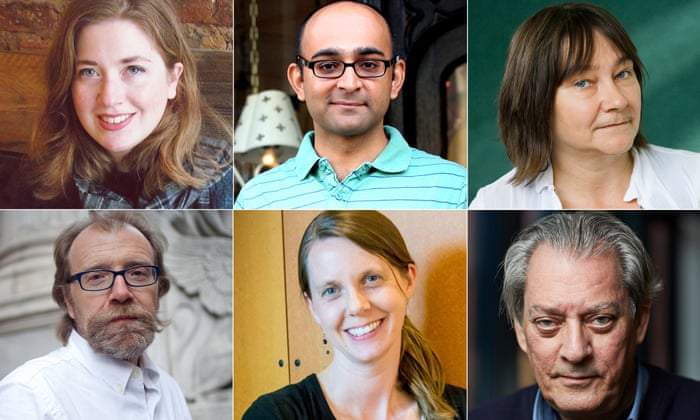
Last year the prize was won by an American: Paul Beatty for his daring novel The Sellout; now, there are three more Americans on the list. Was the Booker right to open the prize up to worldwide writers and the seeming dominance of American fiction, which has plenty of its own prizes? Why don't you read '4321' (Paul Auster), Lincoln in the Bardo (George Saunders) and History of Wolves (Emily Fridlund) to find out? They will offer you some playful narration, multiple selves, a period in a limbo state between this world and the next, an experience of growing up in a failing religious cult, and much more.
Or why not try the work of a debut British novelist, 29-year-old Fiona Mozley who wrote Elmet on her phone during her daily commute? Moshin Hamid is back after the success of The Reluctant Fundamentalist with his new novel, Exit West, and the celebrated Ali Smith (in the running for the fourth time) completes the line-up with her post-Brexit novel, Autumn.
You'll find them in the library, so why not check one out today? If you're someone who likes to add hardbacks to your book collection at bargain prices, why not check out The Book People's annual Booker Shortlist offer where they give you all six books for about £40?
The winner will be announced on October 17, just in time for you to spend the October Remedy deciding whether the judges got it right.
Last year the prize was won by an American: Paul Beatty for his daring novel The Sellout; now, there are three more Americans on the list. Was the Booker right to open the prize up to worldwide writers and the seeming dominance of American fiction, which has plenty of its own prizes? Why don't you read '4321' (Paul Auster), Lincoln in the Bardo (George Saunders) and History of Wolves (Emily Fridlund) to find out? They will offer you some playful narration, multiple selves, a period in a limbo state between this world and the next, an experience of growing up in a failing religious cult, and much more.Or why not try the work of a debut British novelist, 29-year-old Fiona Mozley who wrote Elmet on her phone during her daily commute? Moshin Hamid is back after the success of The Reluctant Fundamentalist with his new novel, Exit West, and the celebrated Ali Smith (in the running for the fourth time) completes the line-up with her post-Brexit novel, Autumn.
You'll find them in the library, so why not check one out today? If you're someone who likes to add hardbacks to your book collection at bargain prices, why not check out The Book People's annual Booker Shortlist offer where they give you all six books for about £40?
The winner will be announced on October 17, just in time for you to spend the October Remedy deciding whether the judges got it right.
Tuesday, 12 September 2017
Book of the Week
And Then There Were None by Agatha Christie
Recommended by William Shackleton
And Then There Were None is another in a long line of murder mysteries by author Agatha Christie. Ten people receive letters from a U. N. Owen inviting them to stay a few days on Soldier Island, a small island several miles off the Devon coast. Throughout their stay, one by one the guest on the island start dying. It is soon realised that the murderer is one of the guests.
Recommended by William Shackleton
And Then There Were None is another in a long line of murder mysteries by author Agatha Christie. Ten people receive letters from a U. N. Owen inviting them to stay a few days on Soldier Island, a small island several miles off the Devon coast. Throughout their stay, one by one the guest on the island start dying. It is soon realised that the murderer is one of the guests.
Friday, 8 September 2017
Five Books about Apes
Miss McLaren
Today’s post is one of our occasional ‘fist of five’ series, looking at five books on a related theme.
Today, to mark this summer’s conclusion (or not) of this author’s favourite movie franchise, it’s books about apes. Curious George does not feature ... *
Today’s post is one of our occasional ‘fist of five’ series, looking at five books on a related theme.
Tuesday, 5 September 2017
Book of the Week
Shoe Dog by Phil Knight
Recommended by Knut Wiwen-Nilsson
Shoe Dog, written by Phil Knight (CEO of Nike), documents his creation of the multi-billion dollar company, which has recently surpassed $30 billion in sales, and whose poignant 'swoosh' logo is universally recognised.
The book takes the reader through the hectic, perilous and distressing journey that Knight underwent, and refreshingly gives no indication of prognostic success. From the early days of Blue Ribbon (his initial company which consisted of selling individual pairs of shoes manually) to the global domination of Nike, Knight describes his journey honestly and exceptionally well, considering he is an obsessive businessman, not a writer.
Recommended by Knut Wiwen-Nilsson
Shoe Dog, written by Phil Knight (CEO of Nike), documents his creation of the multi-billion dollar company, which has recently surpassed $30 billion in sales, and whose poignant 'swoosh' logo is universally recognised.
The book takes the reader through the hectic, perilous and distressing journey that Knight underwent, and refreshingly gives no indication of prognostic success. From the early days of Blue Ribbon (his initial company which consisted of selling individual pairs of shoes manually) to the global domination of Nike, Knight describes his journey honestly and exceptionally well, considering he is an obsessive businessman, not a writer.
Friday, 1 September 2017
Welcome Back!
For those of you new to the school, today's post is an introduction to the book blog - telling you a bit more about what it does, and how you can get involved.
We started the SPS Book Blog back in 2015, as a way of creating a space in the school where people could discuss writers, reading and all things book-related. The blog publishes reviews, features, and articles, as well as creative writing - including the 8th form creative writing magazine, Areo (click on the magazine name to read the most recent issue).
If you're someone who's interested in writing, or is thinking about journalism, the blog is a place where you can start publishing material and building up a portfolio.
Thursday, 6 July 2017
Areo
The summer issue of Areo magazine has now been published: you can read it online here.
Copies of the printed magazine will be available in school tomorrow: please contact Fahd Al-Amoudi, Andre Hirschler or Nikita Lysyuk if you would like a copy. If you'd like to write for Areo magazine next year, contact Mr Hager.
Tuesday, 4 July 2017
Summer Reading
For our final post of the term, Rev Blackstone, Dr Perkins, Mr Boss, Dr Gardam, Ms Padelford and Mr O'Keeffe, all of whom (sadly) are leaving SPS this year, very kindly answered our questions about the books they enjoy. Here, to inspire you with ideas for summer reading, are their responses.
Friday, 30 June 2017
The Final Countdown
The book blog was delighted - and frankly relieved - to see Professor Minerva McGonagall topping the vote for Hogwarts' best member of staff (we've always had our doubts about Dumbledore's professional ethics).
Thursday, 29 June 2017
Hogwarts Staff Appraisal
Yesterday's poll saw us accused of slandering Severus Snape by putting him in a poll of villains: he still ended up top, with demonic duo Dolores Umbridge and Bellatrix Lestrange tied in second place. Is this because he's the best villain, or simply because he's one of the best characters? It's hard to decide, but Snapeheads get another chance to vote for him today, as we ask you who's your favourite member of the Hogwarts faculty:
Will he win again? And should we have included Dobby?
As today we're focussing on the Hogwarts staff, we thought we'd ask the SPS teachers for their Potter memories, and despite this being a manically busy time of the year, several of them were kind enough to respond.
Will he win again? And should we have included Dobby?
As today we're focussing on the Hogwarts staff, we thought we'd ask the SPS teachers for their Potter memories, and despite this being a manically busy time of the year, several of them were kind enough to respond.
Wednesday, 28 June 2017
Something Wicked This Way Comes
Yesterday's poll saw Harry Potter and the Prisoner of Azkaban top the charts of the series' cinematic adaptations.
Today's poll takes a trip to the dark side: we're asking you to vote on which of the novels' many nefarious nemeses is the most noxious - who's the best of a bad lot?
Is it the biggest bad himself, Lord Voldemort? Does Dolores Umbridge still give you nightmares? Is Draco Malfoy just the product of bad parenting? Should Snape really be on the list at all?
You decide - cast your vote now (and remember, if you're reading this on your phone, you need to access the web version of the blog to vote ...).
Today's poll takes a trip to the dark side: we're asking you to vote on which of the novels' many nefarious nemeses is the most noxious - who's the best of a bad lot?
Is it the biggest bad himself, Lord Voldemort? Does Dolores Umbridge still give you nightmares? Is Draco Malfoy just the product of bad parenting? Should Snape really be on the list at all?
You decide - cast your vote now (and remember, if you're reading this on your phone, you need to access the web version of the blog to vote ...).
Tuesday, 27 June 2017
Potter on Film
Yesterday's poll saw Harry Potter and the Goblet of Fire a clear winner in the popular vote, with Harry Potter and the Prisoner of Azkaban in second place, and Deathly Hallows in third. Today's poll looks at the film adaptations, from where it all begins -
to where it all ends -
But which film is the best? Will Goblet of Fire do the double? Is Harry Potter and the Deathly Hallows really just one film? And should we have included Fantastic Beasts and Where to Find Them?
You decide ... polls are open until midnight. And as always, if you're reading this on your phone, remember that you need to go to the web version of the blog to vote: click 'web version' at the bottom of your screen to get there.
to where it all ends -
But which film is the best? Will Goblet of Fire do the double? Is Harry Potter and the Deathly Hallows really just one film? And should we have included Fantastic Beasts and Where to Find Them?
You decide ... polls are open until midnight. And as always, if you're reading this on your phone, remember that you need to go to the web version of the blog to vote: click 'web version' at the bottom of your screen to get there.
Monday, 26 June 2017
Happy 20th Anniversary, Harry Potter!
It was twenty years ago today that Bloomsbury first published Harry Potter and the Philosopher's Stone, and unleashed a phenomenon. This week, the book blog is celebrating all things Harry Potter related, and we'll be running a daily poll: today, we'd like you to tell us which of the Harry Potter books is the best in the series.
Friday, 23 June 2017
Frank's Last Invigilation
Today's blog post is a short story by Mr O'Keeffe about Frank, a teacher on the verge of retirement, and the last invigilation session he will ever, ever do.
Tuesday, 20 June 2017
Book of the Week
A Clockwork Orange by Anthony Burgess
Recommended by Louis Odgers
Alex is a teenage gang member ruling the English nights with his three 'droogs' in Burgess’s futuristic imagination of society, taking pleasure in performing the 'ultra-violence' on members of the public.
However, when one seemingly simple robbery goes wrong and Alex is betrayed by his friends, he is captured and sent to prison where he is one of the first to trial an experimental method of imposing good behaviour on criminals.
Recommended by Louis Odgers
Alex is a teenage gang member ruling the English nights with his three 'droogs' in Burgess’s futuristic imagination of society, taking pleasure in performing the 'ultra-violence' on members of the public.
However, when one seemingly simple robbery goes wrong and Alex is betrayed by his friends, he is captured and sent to prison where he is one of the first to trial an experimental method of imposing good behaviour on criminals.
Book of the Week
Vile Bodies by Evelyn Waugh
Recommended by Louis Odgers
Vile Bodies by Evelyn Waugh is a satirical and comedic novel that follows the upper class of London and their never ending partying night life in the 1930s.
Friday, 16 June 2017
So long, and thanks for all the books ...
The school's new library is nearing completion, and so sadly, the days of the current Walker Library are numbered. In this post, the Book Blog celebrates the library, and the three friendly and indefatigable librarians who work there - Mrs Jones, Mrs Wilkinson and Mrs Aslett - who were kind enough to answer the blog's questions.
Tuesday, 13 June 2017
Book of the Week
Victorians Undone by Kathryn Hughes
Recommended by Miss McLaren
When we think of the Victorians, argues biographer Kathryn Hughes, we tend to think of them only from the neck up, like the US presidents on Mount Rushmore: their bodies, and the rest of their physicality (including how they smelled) don’t seem to exist, let alone matter.
But Hughes believes that Victorian bodies are important, and in Victorians Undone, she explains why.
Recommended by Miss McLaren
When we think of the Victorians, argues biographer Kathryn Hughes, we tend to think of them only from the neck up, like the US presidents on Mount Rushmore: their bodies, and the rest of their physicality (including how they smelled) don’t seem to exist, let alone matter.
But Hughes believes that Victorian bodies are important, and in Victorians Undone, she explains why.
Friday, 26 May 2017
Book of the Week
The War of the Worlds by HG Wells
Recommended by Jasper Parish
HG Wells’ thriller, The War of the Worlds, follows the desperate survival of a single unnamed protagonist throughout an unprecedented martian invasion. The novel explores everything, from the sighting of activity on Mars to the effect of earth’s hostile conditions on extra-terrestrials.
Wells’ style of writing appealed to me because he leaves out no details and describes everything as if he were truly setting eyes on it. He is very careful to make every nook and cranny believable. This really adds a huge amount to the already good plot because without these realistic descriptions, the novel would be almost unreadable. So, with solid descriptions, Wells’ thriller becomes a very interesting read.
Recommended by Jasper Parish
HG Wells’ thriller, The War of the Worlds, follows the desperate survival of a single unnamed protagonist throughout an unprecedented martian invasion. The novel explores everything, from the sighting of activity on Mars to the effect of earth’s hostile conditions on extra-terrestrials.
Wells’ style of writing appealed to me because he leaves out no details and describes everything as if he were truly setting eyes on it. He is very careful to make every nook and cranny believable. This really adds a huge amount to the already good plot because without these realistic descriptions, the novel would be almost unreadable. So, with solid descriptions, Wells’ thriller becomes a very interesting read.
Tuesday, 23 May 2017
Book of the Week
The Day of the Triffids by John Wyndham
Recommended by Jonah Boothe
The Day of the Triffids is a dystopian novel written in 1951 by English science fiction writer John Wyndham. The book is set around the time of the cold war, as is shown by the fact that the triffids are suggested to be a soviet experiment gone wrong.
Recommended by Jonah Boothe
The Day of the Triffids is a dystopian novel written in 1951 by English science fiction writer John Wyndham. The book is set around the time of the cold war, as is shown by the fact that the triffids are suggested to be a soviet experiment gone wrong.
Friday, 19 May 2017
The Wind in the Willows
Director's Notes by Mr Anthony
The Wind in the Willows, written by Kenneth Grahame in 1908, is one of those literary classics (like The Wizard of Oz, Alice or, now, The Lord of the Rings) for which the aesthetic potency of illustration and adaptation has somewhat eclipsed the musty old book-bound words themselves – which is why many more people claim to have read these novels than actually have.
I have never read The Wind in the Willows but, as long as I can remember, I have got the gist. A combination of the 1996 Pythonesque film adaptation directed by Terry Jones (starring Jones as Mr. Toad, Eric Idle as Rat, and a lovely turn from Victoria Wood as, of course, The Tea Lady), the charming illustrations of E. H. Shepard (an addition to the 1933 reprint, from the illustrator of Winnie the Pooh, which have become the blueprint for stage and film designers for nearly a century) and this, Bennett’s masterful 1990 stage adaptation for the National Theatre, have meant that one is so familiar with these anthropomorphized riverbank capers that one can blithely lie about having read the original with no qualms whatsoever (something, incidentally, that the recent BBC adaptation has finally allowed me to do about War and Peace).
The Wind in the Willows, written by Kenneth Grahame in 1908, is one of those literary classics (like The Wizard of Oz, Alice or, now, The Lord of the Rings) for which the aesthetic potency of illustration and adaptation has somewhat eclipsed the musty old book-bound words themselves – which is why many more people claim to have read these novels than actually have.
I have never read The Wind in the Willows but, as long as I can remember, I have got the gist. A combination of the 1996 Pythonesque film adaptation directed by Terry Jones (starring Jones as Mr. Toad, Eric Idle as Rat, and a lovely turn from Victoria Wood as, of course, The Tea Lady), the charming illustrations of E. H. Shepard (an addition to the 1933 reprint, from the illustrator of Winnie the Pooh, which have become the blueprint for stage and film designers for nearly a century) and this, Bennett’s masterful 1990 stage adaptation for the National Theatre, have meant that one is so familiar with these anthropomorphized riverbank capers that one can blithely lie about having read the original with no qualms whatsoever (something, incidentally, that the recent BBC adaptation has finally allowed me to do about War and Peace).
Tuesday, 16 May 2017
Book of the Week
The Bonfire of the Vanities by Tom Wolfe
Recommended by Nicholas Stanger
The novel follows the story of Wall Street banker Sherman McCoy (known to himself as a 'Master of the Universe') and his lover Maria with whom he is having an affair.
Recommended by Nicholas Stanger
Subscribe to:
Posts (Atom)


