
Thursday, 12 December 2019
Books of the Year
It's time for our annual Books of the Year post, where staff and students share their recommendations of the best books they've read this year. So if you're in search of something to read during the holidays, you've come to the right place!


Friday, 6 December 2019
Leaver's Post: Mrs Waller
Sadly, this term we're saying goodbye to Mrs Waller, Head of English at SPJ, whose brilliant teaching has enabled so many future Paulines to navigate their way successfully through their entrance exams, and who also steered 6H at SPS through the murky waters of their iGCSEs last year. She has also been a regular contributor to our book blog posts, and very generously found time to contribute to our regular leavers' questionnaire.
What were you reading when you were a teenager?
Short stories by Ian McEwan and Angela Carter, The Well of Loneliness by Radclyffe Hall, novels by Flann (quirky) and Edna (well-wrought) O'Brien, Perfume by Patrick Suskind, Cold Comfort Farm by Stella Gibbons, all sorts of urban stuff by Michael Bracewell (The Crypto-Amnesia Club was my favourite I think) and Martin Amis ...

... the Gormenghast trilogy by Mervyn Peake, the Philip Pullman of his day perhaps, dystopia by George Orwell and Aldous Huxley, obvious teen winners like The Wasp Factory by Iain Banks, the Hitchhikers ‘trilogy’ by Douglas Adams and in my more earnest moods almost anything by George Eliot (though one of them’s AWFUL – can never remember which…possibly Felix Holt), and comics (like Stray Toasters, Tank Girl, Arkham Asylum, 2000AD)


... the Gormenghast trilogy by Mervyn Peake, the Philip Pullman of his day perhaps, dystopia by George Orwell and Aldous Huxley, obvious teen winners like The Wasp Factory by Iain Banks, the Hitchhikers ‘trilogy’ by Douglas Adams and in my more earnest moods almost anything by George Eliot (though one of them’s AWFUL – can never remember which…possibly Felix Holt), and comics (like Stray Toasters, Tank Girl, Arkham Asylum, 2000AD)

Monday, 2 December 2019
Book of the Week
Nevernight by Jay Kristoff
Recommended by Thomas Chittenden
Mia was only ten years old when she was given her first lesson in death. Six years later, she takes her first steps towards keeping the promise she made when she lost it all, barely escaping with her own life, her ‘familia’ less fortunate.

All the odds are against her though and vengeance against such powerful enemies seems futile, so if she is to have her revenge, Mia knows she must become a weapon without equal. She must prove herself against the deadliest of friends and enemies and not only endure and learn from the teachings of murderers - but also survive it. As the book says: 'The Red Church is no ordinary school, but Mia is no ordinary student.' And as Jay Kristoff puts it: 'Iron or glass they’d asked? Mia clenched her jaw. Shook her head. She was neither. She was steel.'
Recommended by Thomas Chittenden
Mia was only ten years old when she was given her first lesson in death. Six years later, she takes her first steps towards keeping the promise she made when she lost it all, barely escaping with her own life, her ‘familia’ less fortunate.

All the odds are against her though and vengeance against such powerful enemies seems futile, so if she is to have her revenge, Mia knows she must become a weapon without equal. She must prove herself against the deadliest of friends and enemies and not only endure and learn from the teachings of murderers - but also survive it. As the book says: 'The Red Church is no ordinary school, but Mia is no ordinary student.' And as Jay Kristoff puts it: 'Iron or glass they’d asked? Mia clenched her jaw. Shook her head. She was neither. She was steel.'
Tuesday, 26 November 2019
Book of the Week
Do Androids Dream of Electric Sheep? by Philip K. Dick
Recommended by Luke Leventis
Do Androids Dream of Electric Sheep? is a science fiction masterpiece with huge implications for the future. After the disastrous 'World War Terminus' radioactive dust is spread all over the world. Because of the fear of being dubbed a 'Special' or a nuclear mutant, much of the Earth’s population has migrated to colonies in the solar system.

Wednesday, 20 November 2019
Book of the Week
The Remains of the Day by Kazuo Ishiguro
Recommended by Arsh Parekh
In The Remains of the Day, the reader is taken on a journey with a great (not that he’d agree) butler through the English countryside. Stevens is the perfect example of an immaculate and faultless butler.

Just after reading the first half of the novel, it’s clear simply from his style of narration that Stevens pays much attention to detail. When he describes some of the events in the past, especially leading up to the death of his father, he seems almost cold and insensitive. However, once the reader reads on more, they realise how seriously he takes his role as a butler.
Recommended by Arsh Parekh
In The Remains of the Day, the reader is taken on a journey with a great (not that he’d agree) butler through the English countryside. Stevens is the perfect example of an immaculate and faultless butler.

Just after reading the first half of the novel, it’s clear simply from his style of narration that Stevens pays much attention to detail. When he describes some of the events in the past, especially leading up to the death of his father, he seems almost cold and insensitive. However, once the reader reads on more, they realise how seriously he takes his role as a butler.
Thursday, 14 November 2019
Book of the Week
The Great Gatsby by F Scott Fitzgerald
Recommended by Thomas Wong
At once a belief underpinning perhaps the most advanced nation on earth and a seething conflation of avarice, arrogance, and narcissism, the pursuit of the elusive American Dream has definitively shaped modern society, acting as both cause and catalyst of innovation the world over. Aptly does the cautionary tale of the Great Gatsby illustrate such failures of man ever-proud.

Recommended by Thomas Wong
At once a belief underpinning perhaps the most advanced nation on earth and a seething conflation of avarice, arrogance, and narcissism, the pursuit of the elusive American Dream has definitively shaped modern society, acting as both cause and catalyst of innovation the world over. Aptly does the cautionary tale of the Great Gatsby illustrate such failures of man ever-proud.

Wednesday, 6 November 2019
Book of the Week
Fire in Babylon: How the West Indies Cricket Team Brought a People to its Feet by Simon Lister
Recommended by Rahul de Silva
The West Indian cricket side of the late 1970s and 1980s is arguably the greatest cricket team of all time, but how did this come to be? What was the background behind the side and what was the social impact of the team?

Recommended by Rahul de Silva
Simon Lister’s Fire in Babylon explores these facets and explains how Clive Lloyd managed to unite the West Indies team. Lister is widely regarded as an authoritative journalist, and his awe of Lloyd and his team is apparent throughout. The book is rich in fact, with first-hand accounts by the main protagonists.
Tuesday, 29 October 2019
Book of the Week
Born a Crime by Trevor Noah
Recommended by James Wilson
Trevor Noah is now a very successful comedian and has a very popular show on Comedy Central. However, his childhood was much more challenging.

He was born a mixed-race child in South Africa towards the end of Apartheid, and Born a Crime, his autobiography, explores themes such as poverty, racism and belonging in an truly amusing style. However, this does not make the book any less hard-hitting and throughout the book there are many events that will shock and worry the reader.
Tuesday, 8 October 2019
And the (SPS) Booker Prize Winner of 2019 is ...
This year's Predict the Booker Prize, held last night in the Kayton Library, and compèred by Mr Hollands, gave six Pauline readers the chance to make a case on behalf of one of the books on the Booker shortlist, and win the audience's vote.
First off was Teddy Ackery, whose pitch for Bernardine Evaristo's Girl, Woman, Other focussed on its sense of freedom and lack of exclusivity. The book's characters are predominantly black, working-class lesbians, and Teddy confessed some early hesitation about the appropriateness of a white, middle-class male reader waxing lyrical about experiences so different from his own. But ultimately, he argued, this was a book about inclusion, a funny and accessible novel that speaks to everyone through its diverse range of characters and themes.

First off was Teddy Ackery, whose pitch for Bernardine Evaristo's Girl, Woman, Other focussed on its sense of freedom and lack of exclusivity. The book's characters are predominantly black, working-class lesbians, and Teddy confessed some early hesitation about the appropriateness of a white, middle-class male reader waxing lyrical about experiences so different from his own. But ultimately, he argued, this was a book about inclusion, a funny and accessible novel that speaks to everyone through its diverse range of characters and themes.

Tuesday, 1 October 2019
Black History Month
As this year's Black History Month begins - with events at SPS including a reading group discussion of Reni Eddo-Lodge's Why I'm No Longer Talking to White People About Race, as well as a display of books in the library and from the SPS archive - here at the book blog, we thought we'd put together some reading suggestions, including fiction and non-fiction, aimed at all ages: some are new works, and others are classics, and some are particularly linked to this year's theme of 'Black Britain'. If you'd like to suggest a book we should add to the list, please feel free to use the comments box at the end of the post.


Passing for White by Tanya Landman
1848 – America’s Deep South. Slave girl Rosa is pale-skinned enough to ‘pass for white’, yet escape seems an impossible dream until she meets Benjamin. Together, they hatch a desperate plan. If Rosa poses as a white gentleman, Benjamin can travel as her slave... But can Rosa hold her nerve on their thousand-mile flight to freedom? Inspired by a true story, this is a powerful tale of danger, injustice and unimaginable courage.

The Hate U Give by Angie Thomas
Gripping and powerful young adult novel about the point blank shooting by police of an African American teenager, told through the eyes of 16 year old Starr, who is the only witness to her friend's murder. Black Lives Matter.

Dear Martin by Nic Stone
Raw and compelling young adult novel about contemporary race relations in the US. Justyce McAllister is top of his class and bound for uni, but none of that matters to the police who arrest him. He looks to the teachings of Dr. Martin Luther King Jr. for answers. But do they hold up anymore?
Tuesday, 17 September 2019
Book of the Week
The Mandibles by Lionel Shriver
Recommended by Fintan Delaney
The Mandibles is about a family living in the United States in 2029 when suddenly, during a debt crisis, the country's economy collapses - a collapse which leads to the rise of a supra-national currency: gold. America is relegated from a global superpower to a failing state, and civilisation all but breaks down.

The book follows four generations of an American family, and the author explores what financial ruin looks like to those who have the most to lose from it. I found this an extremely interesting and dark novel about family relationship bonds when all seems to be falling apart around you, as well as the stress of stepping into the unknown and picking up the pieces of a broken society. I really liked this dystopian fiction for the way it portrays a unique view of what happens to the median of society, and how people react as the world collapses around them. The novel talks about people being stripped of their normality, and how they cope when their 'bubble like world' is taken away.

I also like the fact that the novel talks about the socio-economic changes that a society can suddenly go through, especially as this seems a plausible and almost a realistic event that could happen in the near future. I would recommend this novel to all people who like dystopian fiction, and simply enjoy a unique story, as it is a gripping read that explores a semi-realistic 'what if' of the near future.
Recommended by Fintan Delaney
The Mandibles is about a family living in the United States in 2029 when suddenly, during a debt crisis, the country's economy collapses - a collapse which leads to the rise of a supra-national currency: gold. America is relegated from a global superpower to a failing state, and civilisation all but breaks down.

The book follows four generations of an American family, and the author explores what financial ruin looks like to those who have the most to lose from it. I found this an extremely interesting and dark novel about family relationship bonds when all seems to be falling apart around you, as well as the stress of stepping into the unknown and picking up the pieces of a broken society. I really liked this dystopian fiction for the way it portrays a unique view of what happens to the median of society, and how people react as the world collapses around them. The novel talks about people being stripped of their normality, and how they cope when their 'bubble like world' is taken away.

I also like the fact that the novel talks about the socio-economic changes that a society can suddenly go through, especially as this seems a plausible and almost a realistic event that could happen in the near future. I would recommend this novel to all people who like dystopian fiction, and simply enjoy a unique story, as it is a gripping read that explores a semi-realistic 'what if' of the near future.
Thursday, 12 September 2019
Book of the Week
Homo Deus by Yuval Noah Harari
Recommended by Marcus Baker
Homo Deus is a non-fiction sequel to Sapiens that takes a further step to envision mankind's future given the rapid advancement of technology and medical/biological sciences.

Some major themes include: the ability of man to change and create our environment (hence the 'Deus' in the title) and what might happen; the pursuit of health, wellness and even immortality; problems with technology and medical advancements (eg artificial intelligence and genetics engineering), obsession with ever more information and data as well as negatives of modern life driven by the internet.
Recommended by Marcus Baker
Homo Deus is a non-fiction sequel to Sapiens that takes a further step to envision mankind's future given the rapid advancement of technology and medical/biological sciences.

Some major themes include: the ability of man to change and create our environment (hence the 'Deus' in the title) and what might happen; the pursuit of health, wellness and even immortality; problems with technology and medical advancements (eg artificial intelligence and genetics engineering), obsession with ever more information and data as well as negatives of modern life driven by the internet.
Thursday, 29 August 2019
Welcome Back!
After a turbulent few days for the UK - scorching sunshine, EFL expulsions and Boris Johnson vs Democracy - what better time to get lost in a good book? The blog is here to help you find your way ...

We publish posts once or twice a week, with a regular 'Book of the Week' review on Tuesdays, and another post on Fridays. As well as recommendations, we have reading lists, polls, creative writing and World Book Day quizzes. Everyone is welcome to contribute - students, teachers, parents: all you have to do is e-mail your post to us at spsbookblog@stpaulsschool.org.uk, or contact any member of the English Dept. The blog is what you make it - so make it amazing, and have a great term!


We publish posts once or twice a week, with a regular 'Book of the Week' review on Tuesdays, and another post on Fridays. As well as recommendations, we have reading lists, polls, creative writing and World Book Day quizzes. Everyone is welcome to contribute - students, teachers, parents: all you have to do is e-mail your post to us at spsbookblog@stpaulsschool.org.uk, or contact any member of the English Dept. The blog is what you make it - so make it amazing, and have a great term!

Tuesday, 2 July 2019
Final Post of the Year ...
Sadly, this term we say goodbye to Mr Hempstead, Miss Cogbill, Dr Weller, Mrs Holmes, Mr Toller and Colet Fellow Mr Espey - but they very kindly offered to answer the book blog's leavers' questionnaire before departing: if you're looking for some summer reading, here are plenty of suggestions ...
What were you reading when you were a teenager?
Mr Hempstead: I spent a lot of time on the cricket and football pitch as a teenager, but as I lived in the middle of nowhere I did manage to read quite a bit. The Lord of the Rings absorbed me for an entire Christmas holidays when I was about 15, and I read pretty much the complete works of Steinbeck from the ages of 14 to 17 as my parents had the full set on their bookshelf. I particularly like The Winter of our Discontent – it seemed to me to be a bit more nuanced than some of the others – and I enjoyed the more comedic works. The ne’er-do-wells of Cannery Row reminded me of a lot of men in my village!

What were you reading when you were a teenager?
Mr Hempstead: I spent a lot of time on the cricket and football pitch as a teenager, but as I lived in the middle of nowhere I did manage to read quite a bit. The Lord of the Rings absorbed me for an entire Christmas holidays when I was about 15, and I read pretty much the complete works of Steinbeck from the ages of 14 to 17 as my parents had the full set on their bookshelf. I particularly like The Winter of our Discontent – it seemed to me to be a bit more nuanced than some of the others – and I enjoyed the more comedic works. The ne’er-do-wells of Cannery Row reminded me of a lot of men in my village!

Tuesday, 18 June 2019
10 Things To Do Before You Leave School
10 Things to Do Before You Leave School is the story of Ruby, a teenager whose life fell apart when her father died suddenly: now she's returning to school for her final year, and not sure how she's going to cope. The night before term starts, she finds a list left for her by her father: a list of ten things he thought she should do before she leaves school ...Will she do them? And what will happen when she does?

10 Things is an excellent young adult novel, which deals with serious issues, but is full of humour and insight into a whole range of topics - everyday family relationships, the minefield of teenage social life and love, and ludicrously pretentious student drama among them. It also has plenty to say about school life - including the fabled rite of passage that is 'muck up day' - and that's hardly surprising, because it's written by none other than Bernard O'Keeffe, ex-SPS English teacher and former 8th Form Undermaster. He was kind enough to answer some of the book blog's questions.

10 Things is an excellent young adult novel, which deals with serious issues, but is full of humour and insight into a whole range of topics - everyday family relationships, the minefield of teenage social life and love, and ludicrously pretentious student drama among them. It also has plenty to say about school life - including the fabled rite of passage that is 'muck up day' - and that's hardly surprising, because it's written by none other than Bernard O'Keeffe, ex-SPS English teacher and former 8th Form Undermaster. He was kind enough to answer some of the book blog's questions.
Tuesday, 19 March 2019
Book of the Week
Red Notice by Bill Browder
Recommended by Alessandro Comoli
Red Notice, judged on its literary qualities alone, perhaps is not the most impressive novel. However, this account of the manager of a major hedge-fund manager (Browder), his interaction with Vladimir Putin, and his uncovering of the nefarious affairs at the root of the Russian oligarchy makes for a fascinating read and is very applicable to the modern context.

Recommended by Alessandro Comoli
Red Notice, judged on its literary qualities alone, perhaps is not the most impressive novel. However, this account of the manager of a major hedge-fund manager (Browder), his interaction with Vladimir Putin, and his uncovering of the nefarious affairs at the root of the Russian oligarchy makes for a fascinating read and is very applicable to the modern context.

Thursday, 14 March 2019
Titus: Why Now?
Next week's school play is Shakespeare's Titus Andronicus. In today's post, Mr Broughton offers an introduction to his version of the tragedy: you can also watch a new trailer for the production here.

‘A heap of rubbish’ was Edward Ravenscroft’s description of the play, although he was happy enough to create from it one of the most faithful Restoration adaptations of Shakespeare’s work, one which enjoyed huge popularity for over fifty years.

‘A heap of rubbish’ was Edward Ravenscroft’s description of the play, although he was happy enough to create from it one of the most faithful Restoration adaptations of Shakespeare’s work, one which enjoyed huge popularity for over fifty years.
Monday, 11 March 2019
The Final Shelfie Quiz - answers revealed!!!
Friday, 8 March 2019
The Final Shelfie Quiz ...
Today is our final quiz - and it features an eclectic mix of shelfies generously contributed by teachers from the Drama, Physics, Economics, and Classics dept - Mr Kerr, Mr Warriner, Mr Jacoby, Mr Block and Miss Waterfield - plus rowing coach Mr Bourne (OP), the head of the US Universities Dept Mrs Graham AND (drum roll ...) the High Master himself, Professor Bailey.
SO - whose literary interests embrace James Bond and the Beatniks? Where does John Colet meet the one ring to rule them all? Who has abandoned shelving altogether and stacks their books in a vertical tower? And is that another copy of Moby Dick we see before us? It's your final chance to match the shelfies to the teacher: and here's the link - have fun!
SO - whose literary interests embrace James Bond and the Beatniks? Where does John Colet meet the one ring to rule them all? Who has abandoned shelving altogether and stacks their books in a vertical tower? And is that another copy of Moby Dick we see before us? It's your final chance to match the shelfies to the teacher: and here's the link - have fun!
Thursday, 7 March 2019
World Book Day: Shelfie Quiz Number 4 ...
As today is World Book Day, we're delighted to report that yesterday's shelfie quiz had the highest rate of successful identifications so far. Find out how many you got right later in the post.
Today's penultimate quiz features shelfies generously donated by teachers from the History, Biology, ICT and Theology & Philosophy departments. So - whose shelves go from CSI to cacti, and whose from psychopathology to pumpkins? Who enjoys travel writing and classic detective fiction, and who likes talking to serial killers? Who loves lists, and who else arranges their books by colour (this is clearly a thing), and whose arm is that??? Mr Watkins's? Dr Brigham's? Dr Bennett's? Dr Langley's? Mr Gaydon's? Miss Ramsay-Overall's? Mr Green's? or Dr Shammas's? You tell us - here's the link to Thursday's Shelfie Quiz.
Today's penultimate quiz features shelfies generously donated by teachers from the History, Biology, ICT and Theology & Philosophy departments. So - whose shelves go from CSI to cacti, and whose from psychopathology to pumpkins? Who enjoys travel writing and classic detective fiction, and who likes talking to serial killers? Who loves lists, and who else arranges their books by colour (this is clearly a thing), and whose arm is that??? Mr Watkins's? Dr Brigham's? Dr Bennett's? Dr Langley's? Mr Gaydon's? Miss Ramsay-Overall's? Mr Green's? or Dr Shammas's? You tell us - here's the link to Thursday's Shelfie Quiz.
Wednesday, 6 March 2019
World Book Week: Shelfie Quiz Number 3 ...
Yesterday's quiz offered produced some interesting results - find out how many shelfies you correctly identified later on in the post. Today, we have a selection of shelfies very kindly volunteered by teachers from the Art, Chemistry and Modern Languages depts. Whose interests range from Spike Milligan to metaphysical poetry, or from the Mafia to Milton? Which teacher arranges their books by colour? Whose collection includes The Short and Snarky Guide to Coxing? Who likes fantasy, sci-fi and cooking spicy food - Mrs Holmes? Mr Smith? Mr Lowes? Mrs Mitchell? Miss Kemal-ur-Rahim? Miss Grogan? or Mr Hollands? You tell us: here's the link to Wednesday's Shelfie Quiz.
Tuesday, 5 March 2019
World Book Week: Shelfie Quiz Number 2 ...
Thanks to everyone who had a go at our first shelfie quiz yesterday. You can find out the answers, including who all those copies of Moby Dick belonged to, below.
Today's quiz features teachers from the Maths, Computing and Engineering departments. Can you figure out whose interests range from Murakami to Monty Don? Where does Hogwarts meet the Night Circus, or Tolkien hunt the White Tiger, or Howard Marks prop up Jack Reacher? Whose bookshelves span coding to cricket, or Dante to Wodehouse? Click on the link to take part in today's quiz - Tuesday's Shelfie Quiz - and see if you can identify the shelfies from Miss Douglass, Mrs Hamma, Mr Allon, Mr Toller, Dr Shravat, Miss Cloete and Dr Harrison.
Monday, 4 March 2019
World Book Day 'Match the Shelfie to the Selfie' Quiz ...
This Thursday,

and to celebrate all things book-related, the blog is running a week of 'match the shelfie to the teacher' quizzes. Every day, we'll be posting some 'shelfies' - photos of bookshelves (you'd probably figured that out) - belonging to SPS teachers, and challenging YOU, the Pauline reader, to work out which shelfie belongs to which teacher.

Today, it's the turn of the English Dept. Mr Hager, Miss McLaughlin, Mr Gardner, Miss Warner, Miss McLaren and Mr Espey have bravely sent in their shelfies: so, on whose double-stacked shelves do Keats and Seneca sit shoulder-to-shoulder? Where does Shakespeare touch base with Langstone Hughes? Henry James squash up with Samuel Beckett? George Eliot snuggle with Strindberg? Where is Nabokov on nodding terms with Flann O'Brien and Sylvia Plath with Proust? Who has more books on film than they know what to do with? and whose bookshelves buckle under a whopping seven copies of Moby Dick?
Click on the link to find out and take part in today's quiz: Monday's 'Match the Shelfie' Quiz - and check out tomorrow's blog-post to see how many you got right. Have fun!

and to celebrate all things book-related, the blog is running a week of 'match the shelfie to the teacher' quizzes. Every day, we'll be posting some 'shelfies' - photos of bookshelves (you'd probably figured that out) - belonging to SPS teachers, and challenging YOU, the Pauline reader, to work out which shelfie belongs to which teacher.

Today, it's the turn of the English Dept. Mr Hager, Miss McLaughlin, Mr Gardner, Miss Warner, Miss McLaren and Mr Espey have bravely sent in their shelfies: so, on whose double-stacked shelves do Keats and Seneca sit shoulder-to-shoulder? Where does Shakespeare touch base with Langstone Hughes? Henry James squash up with Samuel Beckett? George Eliot snuggle with Strindberg? Where is Nabokov on nodding terms with Flann O'Brien and Sylvia Plath with Proust? Who has more books on film than they know what to do with? and whose bookshelves buckle under a whopping seven copies of Moby Dick?
Click on the link to find out and take part in today's quiz: Monday's 'Match the Shelfie' Quiz - and check out tomorrow's blog-post to see how many you got right. Have fun!
Tuesday, 26 February 2019
Book of the Week
Great Expectations by Charles Dickens
Recommended by Otis Parker
A well known classic, Great Expectations tells the story of orphan Pip, an ordinary country boy brought up by his sister and her blacksmith husband.

At first Pip is content to live the simple life of a blacksmith that he seems destined for, but after a meeting with Miss Havisham and beautiful but icy-hearted Estella, Pip finds himself resentful of his more common status. Corrupted by his love for Estella, Pip leaves his loved ones behind and sets off to London in a quest to become a gentleman, sponsored by a mysterious benefactor.
Recommended by Otis Parker
A well known classic, Great Expectations tells the story of orphan Pip, an ordinary country boy brought up by his sister and her blacksmith husband.

At first Pip is content to live the simple life of a blacksmith that he seems destined for, but after a meeting with Miss Havisham and beautiful but icy-hearted Estella, Pip finds himself resentful of his more common status. Corrupted by his love for Estella, Pip leaves his loved ones behind and sets off to London in a quest to become a gentleman, sponsored by a mysterious benefactor.
Friday, 15 February 2019
Bram Stoker's 'Dracula' - still scary after all these years?
In today's post, Sebastian Rodger reassesses a horror classic.
Dracula is an iconic story. The characters and the story that Bram Stoker created over a century ago have gone on to play a significant role in the shaping of a genre, not only in literature, but also in mediums like television and films.

It was clearly an incredible book upon its release, and has stood the test of time, even now still having an impact on horror stories as it was the first to use many techniques which are still employed in literature today. It is also of course well written. Its epistolary style allows the reader to more effectively empathise with the protagonists and thus can understand the fear they feel. Because of this I feel like attempting to review this novel with its history and position as a ‘classic’ is pointless. It has been done countless times before, and I believe is ultimately of little use to the average reader who is just looking for a new book to enjoy. Instead, I will be reviewing it to see if it still works in the modern day.
Dracula is an iconic story. The characters and the story that Bram Stoker created over a century ago have gone on to play a significant role in the shaping of a genre, not only in literature, but also in mediums like television and films.

It was clearly an incredible book upon its release, and has stood the test of time, even now still having an impact on horror stories as it was the first to use many techniques which are still employed in literature today. It is also of course well written. Its epistolary style allows the reader to more effectively empathise with the protagonists and thus can understand the fear they feel. Because of this I feel like attempting to review this novel with its history and position as a ‘classic’ is pointless. It has been done countless times before, and I believe is ultimately of little use to the average reader who is just looking for a new book to enjoy. Instead, I will be reviewing it to see if it still works in the modern day.
Tuesday, 12 February 2019
Book of the Week
Christine by Stephen King
Recommended by George Lyon
The moment Arnie Cunningham lays eyes upon her, he wants her. She is Christine, a ’58 Plymouth Fury. Blood-red, fat-finned and twenty years old, all her promise lies in her past.

In the midst of Stephen King’s enormous repertoire, Christine goes woefully underappreciated. It is story of possession; 600 pages of uncanny suspense, punctuated by action sequences that are harrowingly believable.
Recommended by George Lyon
The moment Arnie Cunningham lays eyes upon her, he wants her. She is Christine, a ’58 Plymouth Fury. Blood-red, fat-finned and twenty years old, all her promise lies in her past.

In the midst of Stephen King’s enormous repertoire, Christine goes woefully underappreciated. It is story of possession; 600 pages of uncanny suspense, punctuated by action sequences that are harrowingly believable.
Friday, 8 February 2019
Fist of Five: Five Books about England and Englishness
JMcL
When satirists Flanders and Swann set out to compose an alternative English national anthem, they decided to open with what they described as typical understatement:
'The English, the English, the English are best! I wouldn't give tuppence for all of the rest!'

Perhaps in today's political climate, with the nastier side of nationalism on display pretty much everywhere, the satirical duo's 'Song of Patriotic Prejudice' is too close to the bone to be funny. But as the UK lumbers unsteadily towards the [Br]exit, this seems as good a time as any to recommend five books exploring some of the strands that make up 'English' (and occasionally British) national identity.
When satirists Flanders and Swann set out to compose an alternative English national anthem, they decided to open with what they described as typical understatement:
'The English, the English, the English are best! I wouldn't give tuppence for all of the rest!'

Perhaps in today's political climate, with the nastier side of nationalism on display pretty much everywhere, the satirical duo's 'Song of Patriotic Prejudice' is too close to the bone to be funny. But as the UK lumbers unsteadily towards the [Br]exit, this seems as good a time as any to recommend five books exploring some of the strands that make up 'English' (and occasionally British) national identity.
Tuesday, 5 February 2019
Book of the Week
The Bonfire of the Vanities by Tom Wolfe
Recommended by Nick Stanger
Apart from the mysterious foreshadowing of tragedy in the title, the most immediately enticing element of this novel for me was the backdrop of 1980s New York. The fast-paced nature of the book combined with its omniscient narrative style packed full of dialogue really fuels the atmosphere of a hectic lifestyle which is established from the onset.

The novel documents just a few months in the life of Sherman McCoy, a successful bond broker at Pierce & Pierce on Wall Street who lives in a flashy two-storey Park Avenue apartment with his wife, to whom he is unfaithful. Whilst navigating the Manhattan highway with his adulteress Maria Ruskin, who is also married, Sherman takes an accidental yet damning turn into the Bronx.
Recommended by Nick Stanger
Apart from the mysterious foreshadowing of tragedy in the title, the most immediately enticing element of this novel for me was the backdrop of 1980s New York. The fast-paced nature of the book combined with its omniscient narrative style packed full of dialogue really fuels the atmosphere of a hectic lifestyle which is established from the onset.

The novel documents just a few months in the life of Sherman McCoy, a successful bond broker at Pierce & Pierce on Wall Street who lives in a flashy two-storey Park Avenue apartment with his wife, to whom he is unfaithful. Whilst navigating the Manhattan highway with his adulteress Maria Ruskin, who is also married, Sherman takes an accidental yet damning turn into the Bronx.
Thursday, 31 January 2019
Why read fiction?
Sometimes we read only for pleasure – and that’s enough. Most recently I read The Way We Live Now by Anthony Trollope for precisely this reason. It’s a brilliant, sometimes scathing, sometimes exuberant satire of polite society. Tongue in cheek, fast and loose, it takes you on a rambunctious ride, and along the way you encounter a morally bankrupt group of high society miscreants. In short, Trollope is like Dickens - but racier.


Monday, 28 January 2019
Book of the Week
Recommended by Daniel Jourdan
This highly fictionalised autobiography tells the tale of a rebellious heroin addict who, in 1980, escapes an Australian maximum-security prison having served 2 years of a 19-year sentence for armed robbery.

After fleeing to Bombay as a 'brave, hard man without a plan', he swiftly finds lasting companionship in a friendly street guide named Prabaker, who introduces him to the seedy life of the city and insists that he changes his false name Lindsay, to Lin, or Linbaba.
Friday, 25 January 2019
Writing Against Time - When Will You Publish Your Great Novel?
Sally Rooney is a great novelist, and she is only 27. Her second novel, Normal People is wonderful, and you should immediately go out and buy it, before settling in to read it in one sitting.
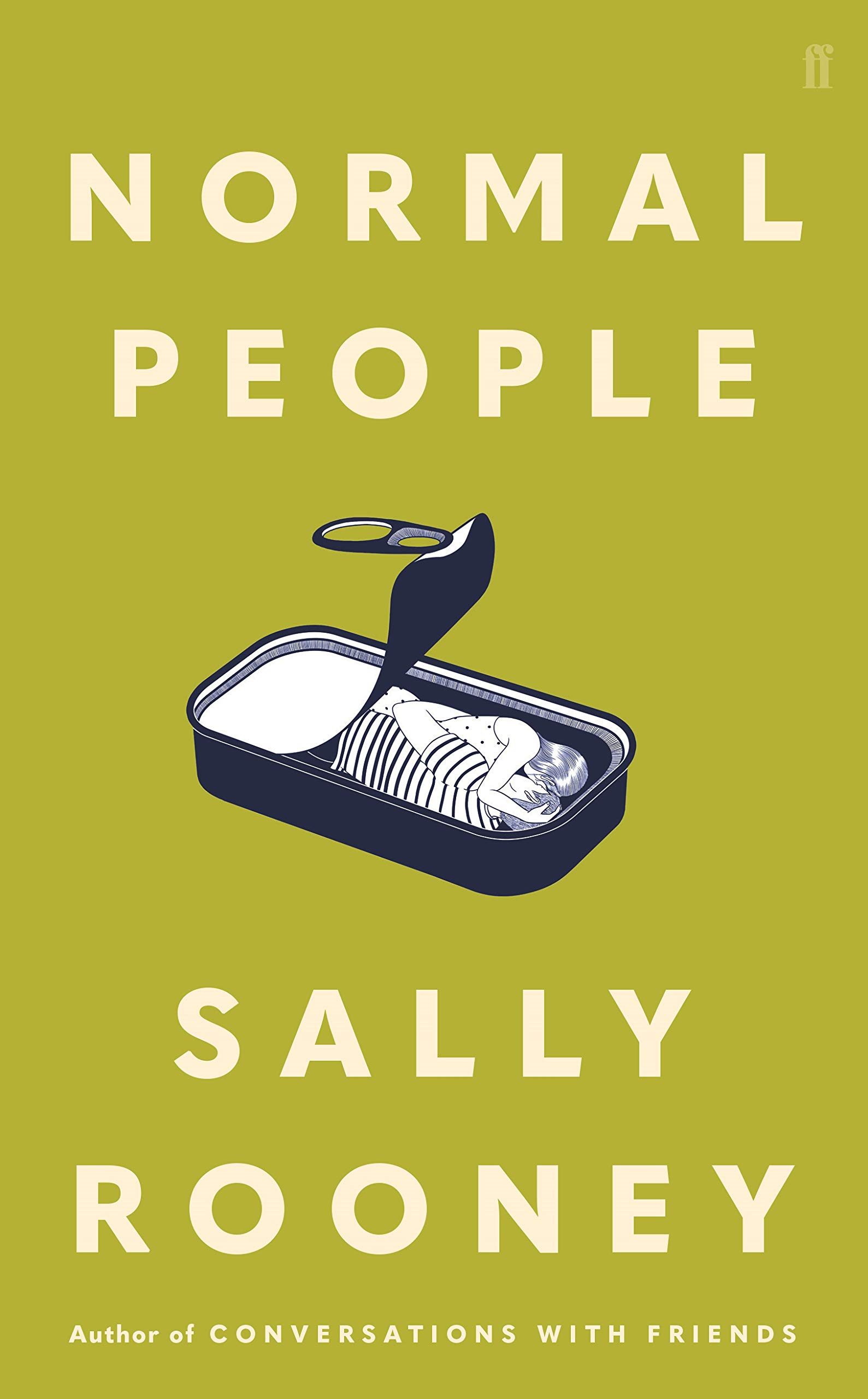
It isn't everyone that has published something marvellous before the age of thirty. Does that mean that it's too late, that we'll never do it? Apparently not. Have a look at this infographic to find out when some of the most famous authors of all time published their work.
It seems like there might be time after all. But why wait?
Thursday, 17 January 2019
Wu-Tang Forever!
Chamber Music about the Wu-Tang ( in 36 Pieces) by Will Ashon
Reviewed by Mr Kemp
This book is a sort of history and meditation on the influential hip hop group Wu-Tang Clan’s first album, Enter the Wu-Tang (36 Chambers). Annoyingly, it doesn’t work. Ashon doesn’t really seem to know exactly what he wants to do with the book. And it shows.

At once Chamber Music is a history of hip hop, a potted biography of RZA, GZA, ODB, Method Man, Raekwon, Ghostface Killah, Inspectah Deck, U-God, and Masta Killa, a treatise on race relations and socio economic equality, as well as being a catalogue of Wu-Tang’s influences from Asian philosophy and martial arts films. As this sounds, it is a mess. The parts don’t cohere into a satisfying whole.
Reviewed by Mr Kemp
This book is a sort of history and meditation on the influential hip hop group Wu-Tang Clan’s first album, Enter the Wu-Tang (36 Chambers). Annoyingly, it doesn’t work. Ashon doesn’t really seem to know exactly what he wants to do with the book. And it shows.
At once Chamber Music is a history of hip hop, a potted biography of RZA, GZA, ODB, Method Man, Raekwon, Ghostface Killah, Inspectah Deck, U-God, and Masta Killa, a treatise on race relations and socio economic equality, as well as being a catalogue of Wu-Tang’s influences from Asian philosophy and martial arts films. As this sounds, it is a mess. The parts don’t cohere into a satisfying whole.
Subscribe to:
Posts (Atom)