The Times Educational Supplement has put together a list of 100 books that every child should read before they leave school. How many have you read? Click on the link below to access the full list.
Thursday, 17 March 2016

Tuesday, 15 March 2016
Book of the Week

American Gods is a novel written by Neil Gaiman. The book is a mixture of fantasy and mythology.
The book revolves around Shadow, a recently released prison convict. He is released three days early from prison when his wife Laura is killed in a car crash along with his friend Robbie. On his way back home to Rock City he meets an odd man known as Mr. Wednesday who he later learns is an incarnation of the god Odin. The story focuses on the battle of the old mythological Gods and the new American Gods such as the media and the internet. It talks about how the belief in these old Gods has diminished as people are now beginning to suck up to the new Gods of the media which have so easily managed to control the way people think and what they do.
I enjoy this book as it asks questions about whether we are all controlled by the new Gods and how far they dictate our lives today. How instead of worshipping the old Gods, we worship idols like celebrities and political leaders and how some people devote their lives to them. The book is gripping and cleverly written and I would recommend it for others to read.
Reviewed by Kito Zilkha
Thursday, 10 March 2016
Poem of the day
'Thaw', by Edward Thomas (OP), written 100 years ago today
The passing of winter and the coming of spring has often inspired poems, from Wordsworth's evocation of the 'first mild day of March' to E.E. Cummings' celebration of 'Just-/spring when the world is mud-/luscious'. On 10 March 1916 the poet Edward Thomas (OP) was at Hare Hall Camp in Essex, training to fight in the First World War, when he wrote this complete poem:
THAW
Over the land freckled with snow half-thawed
The speculating rooks at their nests cawed
And saw from elm-tops, delicate as flowers of grass,
What we below could not see, Winter pass.
The speculating rooks at their nests cawed
And saw from elm-tops, delicate as flowers of grass,
What we below could not see, Winter pass.
Anyone interested in finding out more about Thomas might like to read Matthew Hollis's Now All Roads Lead to France - a biography which won the Costa Prize in 2012 and traces Thomas's decision to fight in WW1 (which inspired his friend Robert Frost's poem 'The Road not Taken') and his becoming a poet in the last two years of his life. Thomas is also the guiding, haunting figure of Robert Macfarlane's The Old Ways - equally highly recommended. Both books are in the library.
 |
| A photo taken at the camp where Thomas wrote the poem. He is in the middle row, second from the left. |
The centenary of Thomas's death in the trenches will be in April 1917, so expect to hear more about him then.
Tuesday, 8 March 2016
Book of the Week
The Stormlight Archives by Brandon Sanderson
Reviewed by Sebastian Rodger
Brandon Sanderson is an American author who writes books in the fantasy and science-fiction genres. He is best known for his ‘Mistborn’ series; however, I will be reviewing his latest series the ‘Stormlight Archives’. So far, he has written two books, The Way of Kings (available in two parts, each around 600 pages) and Words of Radiance (full volume 1087 pages). The books are set on a dystopian world called Roshar, which is barren and hostile. The book begins many years before the book’s main events. An army called the Knights Radiant survive a recurring event called ‘a Desolation’ in which most of humanity is wiped out. However the Heralds, their leaders, wield weapons that carry a curse meaning that should they die, they will suffer greatly then be reborn to repeat the process. After many cycles the Heralds give in, drop their weapons, and die off. Leaderless, the Knights Radiant split up into royal families, passing on their own weapons, ‘shardplate’. These are inferior to the Heralds, but carry no curse. The story then follows many characters such as ‘Kaladin’, ‘Dalinar’ and ‘Szeth’ in the lead up to the next Desolation.
One of the strongest parts of these books are their descriptions of epic landscapes, such as ‘the Shattered Plains’, a desert with huge chasms, and towering plateaus. These dexterously crafted areas make the story extremely engaging, put you in awe, beckoning you to read on and explore further. An example is “His passing churned up a tempest, slamming waves into one another, lifting white caps to be caught in the wind” when Sanderson describes a storm approaching.
Another scenario Sanderson excels at describing are battles. These are what has made this book popular among science fiction fans. He illustrates huge armies dominated by the elite in their shard armours. He shows every detail as the battle develops. “They formed a wedge behind their shardbearers, prying the Parshendi armies open, using spearman formations to cut through and keep going forward.” This is an example of Sanderson showing the tactical efforts of an army.
However, the best part of this book is the storyline. You view it from seven viewpoints, with many more in the book’s interludes, such as the character ‘Geranid’, a humble farmer and ‘Elohkar’, a warlike king. Sanderson makes the most of this, allowing you to piece together parts of the story that are flung across the history, people and landscapes of Roshar. The book also has a religious theme. Part of the story is similar to The Fall in Genesis. The humans are thrown out from of, and left to survive on Roshar. Although the story is very different, it adds familiarity to for the reader, making it easier to get engrossed the series.
In essence this is a series within the epic fantasy genre, which has won a ‘Best Fantasy of the Year’ award, and is my favourite series. I enjoy its thrilling storyline, and imagining the incredible settings that the events leading up to an apocalypse take place in. It is very easy to get absorbed into it, and earns the clichéd plaudit of being ‘unputdownable’. I would highly recommend this book to anyone.
Reviewed by Sebastian Rodger
Brandon Sanderson is an American author who writes books in the fantasy and science-fiction genres. He is best known for his ‘Mistborn’ series; however, I will be reviewing his latest series the ‘Stormlight Archives’. So far, he has written two books, The Way of Kings (available in two parts, each around 600 pages) and Words of Radiance (full volume 1087 pages). The books are set on a dystopian world called Roshar, which is barren and hostile. The book begins many years before the book’s main events. An army called the Knights Radiant survive a recurring event called ‘a Desolation’ in which most of humanity is wiped out. However the Heralds, their leaders, wield weapons that carry a curse meaning that should they die, they will suffer greatly then be reborn to repeat the process. After many cycles the Heralds give in, drop their weapons, and die off. Leaderless, the Knights Radiant split up into royal families, passing on their own weapons, ‘shardplate’. These are inferior to the Heralds, but carry no curse. The story then follows many characters such as ‘Kaladin’, ‘Dalinar’ and ‘Szeth’ in the lead up to the next Desolation.
One of the strongest parts of these books are their descriptions of epic landscapes, such as ‘the Shattered Plains’, a desert with huge chasms, and towering plateaus. These dexterously crafted areas make the story extremely engaging, put you in awe, beckoning you to read on and explore further. An example is “His passing churned up a tempest, slamming waves into one another, lifting white caps to be caught in the wind” when Sanderson describes a storm approaching.
Another scenario Sanderson excels at describing are battles. These are what has made this book popular among science fiction fans. He illustrates huge armies dominated by the elite in their shard armours. He shows every detail as the battle develops. “They formed a wedge behind their shardbearers, prying the Parshendi armies open, using spearman formations to cut through and keep going forward.” This is an example of Sanderson showing the tactical efforts of an army.
However, the best part of this book is the storyline. You view it from seven viewpoints, with many more in the book’s interludes, such as the character ‘Geranid’, a humble farmer and ‘Elohkar’, a warlike king. Sanderson makes the most of this, allowing you to piece together parts of the story that are flung across the history, people and landscapes of Roshar. The book also has a religious theme. Part of the story is similar to The Fall in Genesis. The humans are thrown out from of, and left to survive on Roshar. Although the story is very different, it adds familiarity to for the reader, making it easier to get engrossed the series.
In essence this is a series within the epic fantasy genre, which has won a ‘Best Fantasy of the Year’ award, and is my favourite series. I enjoy its thrilling storyline, and imagining the incredible settings that the events leading up to an apocalypse take place in. It is very easy to get absorbed into it, and earns the clichéd plaudit of being ‘unputdownable’. I would highly recommend this book to anyone.
Thursday, 3 March 2016
World Book Day- 3rd March 2016
To celebrate World Book Day, the following have been recommended by members of staff and are available in the library. They can be found in the display cabinet outside. Why not pick one up and have a read today...
Kurt Vonnegut
 Douglas Adams’ Hitchhiker's Guide to the Galaxy draws on a lot of sci-fi influences, but this is the biggest – it’s like a cheesy 1950s “invaders from Mars” B-movie written from the bleakly optimistic perspective of Vonnegut’s later works like Slaughterhouse-Five and Cat’s Cradle. America’s richest man, an astronaut-turned-waveform and an alien robot are trapped in epochal events as their lives intersect over many years and planets across the solar system. “I was a victim of a series of accidents, as are we all.”
Chosen by Mr D Green
 Neurotribes: The legacy of Autism
Steve Silberman
This is a fascinating look into the history of Autism. How it was first diagnosed and the problems (mainly caused by WW2) in getting it recognised by the scientific community.
Chosen by Miss K Douglass
Jared Diamond
 This book takes a close look at the lives of hunter-gatherer populations and the way their societies work, and contrasts this with the functioning of our own industrialised societies. Diamond uses a number of examples from his own experience, particularly in New Guinea, to illustrate differences in traditional and modern lifestyle, including trade, warfare and conflict resolution, child-rearing practices and care for the elderly. He expertly links these topics to human evolution by illustrating how different societies adopt different strategies to serve their survival under their very own environmental conditions. Beyond a mere comparison of the traditional and the modern, this book convincingly shows that there may be lessons to learn from traditional lifestyle to improve our own lives, individually and collectively.
Chosen by Dr B Kremeyer
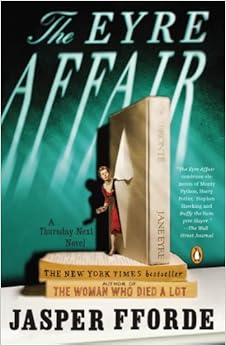 The Eyre Affair
Jasper Fforde
A bizarre comic romp through literature - literally in the case of Thursday Next, surreal literary detective whose job is to save great works from being changed. Acheron Hades is holding Dickens characters to ransom and Next's pursuit leads her through modern Swindon, a Communist Wales and ends among the flames of Thornfield Hall. Huge fun, but with enough depth to save it from being just a romp.
Chosen My Dr K Zetie
 The Death of Ivan Ilyich
Leo Tolstoy
This is a masterly meditation on life and death, recounting the physical decline and spiritual awakening of a worldly, successful man who is faced with his own mortality.
Chosen by Mr S Hollands
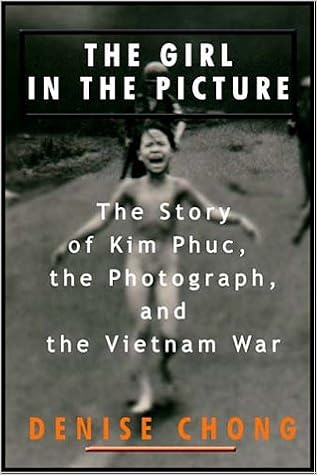 The Story of Kim Phuc, the Photograh and the Vietnam War
Denise Chong.
I read this book whilst travelling in Vietnam and it has remained in my memory forever. It tells the story of the infamous girl caught by a photo journalist in a napalm attack. This horrific incident changed the course of her life in so many ways – she was propelled into the international media spotlight and used as a pawn by the Communist authorities who eventually paid for her university education in Cuba. Her heart wrenching tale is told with real sensitivity and also provides a fascinating insight into the political regimes both before and after the war.
Chosen by Miss C Gill

John Williams
Described as one of great unheralded classics of American literature. It is a beautifully written and deeply moving account of the life of a teacher.
Chosen by Mr A Kerr
 The Future of the Professions
Daniel and Richard Susskind
The father and son Susskind team elegantly paint a picture of what doctoring, lawyering, teaching - and working in the other traditional professions - might look like in the not-too-distant future. The internet and increasingly-intelligent machines feature prominently, but there is no sense of evangelism. It's worth reading if you are a professional, are considering becoming one or simply if you wonder why we allow certain groups of educated people to monopolise the rationing of practical expertise in society.
Chosen by Mr M Smith
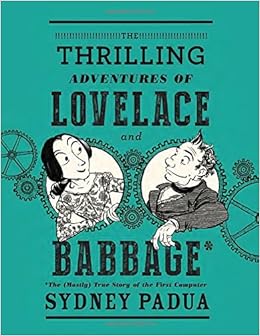
Sydney Padua.
This is a clever, entertaining sprint through the early part of the 19th century, as the dynamic duo veer past all obstacles (including time, space and Queen Victoria), fight crime (and poetry), on their way to inventing the computer. Full of arcane information and witty footnotes.
Chosen by J McLaren
Tuesday, 1 March 2016
Book of the Week
Miracle at Augusta by James Patterson
Miracle at Augusta by Steve de Jong provides a rare and unorthodox insight into the privileged and elitist world of golf. Written through the eyes of Travis McKinley, a retired golfer with a sarcastic humour who is currently battling a mid-life crisis, the book follows his attempts at redemption and his transformation from an arrogant, superior man to a caring father figure for teenager Jerzy Slolarski.

Jerzy moved to America from Eastern Europe, and unsurprisingly his accent, acne and size mean he is constantly feeling the blows of his classmates who are taking advantage of this unaware and defenceless boy.
Recommended by Ben Tatters
Miracle at Augusta by Steve de Jong provides a rare and unorthodox insight into the privileged and elitist world of golf. Written through the eyes of Travis McKinley, a retired golfer with a sarcastic humour who is currently battling a mid-life crisis, the book follows his attempts at redemption and his transformation from an arrogant, superior man to a caring father figure for teenager Jerzy Slolarski.

Jerzy moved to America from Eastern Europe, and unsurprisingly his accent, acne and size mean he is constantly feeling the blows of his classmates who are taking advantage of this unaware and defenceless boy.
Subscribe to:
Posts (Atom)