Wednesday, 28 February 2018

Monster Mash-Up Poll Number 3: which literary character would you least like to have dinner with?

With Shakespeare's Iago and William Blake's Urizen tied in third, and George R Martin's Joffrey beaten into second place, yesterday's poll revealed that monstrosity's human face belongs to - Dolores Umbridge!!!!!

Today's poll asks that all-important question: which literary character would you least like to have dinner with? Have a look at the nominations and then make your choice (and remember, if you're reading this on your phone, you need to go to the web version to vote).

Tuesday, 27 February 2018

Monster Mash-Up Poll Number 2: best monster (human)

Yesterday's poll saw Satan and the Dementors beaten into second and third place respectively by - the Gruffalo!!!!!

Proving that ultimate evil and oblivion are no match for a cuddly, if orthodontically challenged, imaginary beast. Today we move on to darker turf, as we ask you to vote for the most monstrous human in literature: nominations include maniacal monarchs, monstrous matriarchs, mad scientists and just plain bad dads ... Vote now, and remember, if you're reading this on your phone, you need to go to the web version (at the end of the post) to access the poll.

Monday, 26 February 2018

Monster Mash-Up Poll Number 1: best monster (non-human)

This Thursday, 1st March, is World Book Day - and the book blog is celebrating with its regular week of polls.  As 2018 is the bi-centenary of the publication of Mary Shelley's Frankenstein, we've taken monsters as our theme, and each day, we'll be presenting you with a selection of different monsters, or monstrous characters, nominated by SPS pupils and teachers, and inviting you to vote for your favourite.  Today, we're kicking off with a menagerie of non-human monsters: read the nominations, and then cast your vote (if you're reading this on your phone, you need to scroll to the end of the post and click 'web version' to vote). 

Friday, 23 February 2018

'The Sisters' by James Joyce

Mr Kemp

Samuel Beckett, reflecting on his relationship with James Joyce in his later life, said that Joyce 'believed in words'.


Tuesday, 20 February 2018

Book of the Week

Tinker Tailor Soldier Spy by John Le Carré
Recommended by Andrew Spielmann


Tinker Tailor Soldier Spy is a 1974 spy novel by John Le CarrĂ©. It follows a retired senior intelligence officer, George Smiley, trying to uncover a mole at the highest level of British intelligence. He was forced out of ‘the Circus’ (the spy organisation he worked for) after an operation in Czechoslovakia, at the height of the Cold War, went horribly wrong.


However, one year into his retirement he finds out that there is a Soviet spy, who has been rooted deep into British intelligence for decades, working with Smiley’s nemesis in Moscow named Karla. The mole is one of the four most senior officers: Percy Alleline, Roy Bland, Toby Esterhase and Bill Haydon. Smiley investigates and figures out that the senior officers have all been tricked by Karla and the mole, so he sets a trap to catch the traitor.

Friday, 9 February 2018

A Hundred Years On


Gathering dust in a charity shop in Leeds, a seemingly innocuous roll of purple material was left unnoticed for nearly a decade before it was recently discovered to be a suffragette banner dating back to 1908.


The banner was first unveiled by suffragettes Mary Gawthorpe and Rona Robinson in Stevenson Square on 20 June 1908 before it shared the stage with Emmeline Pankhurst at a rally in Manchester’s Heaton Park on 19 July 1908, when she spoke to a crowd of 50,000 people.

Tuesday, 6 February 2018

Book of the Week

Suffragette by Emmeline Pankhurst
Recommended by Dr Duits. 


Pankhurst’s autobiography is an account of her lifelong quest for women to have the vote – from the moment she was first awakened to the gender inequalities surrounding her (she movingly recounts overhearing her father lament ‘pity she wasn’t born a lad’) up until the outbreak of 1914 (when the struggle for women’s votes was put on hold).

Friday, 2 February 2018

Costa Book of the Year (2017) Announced
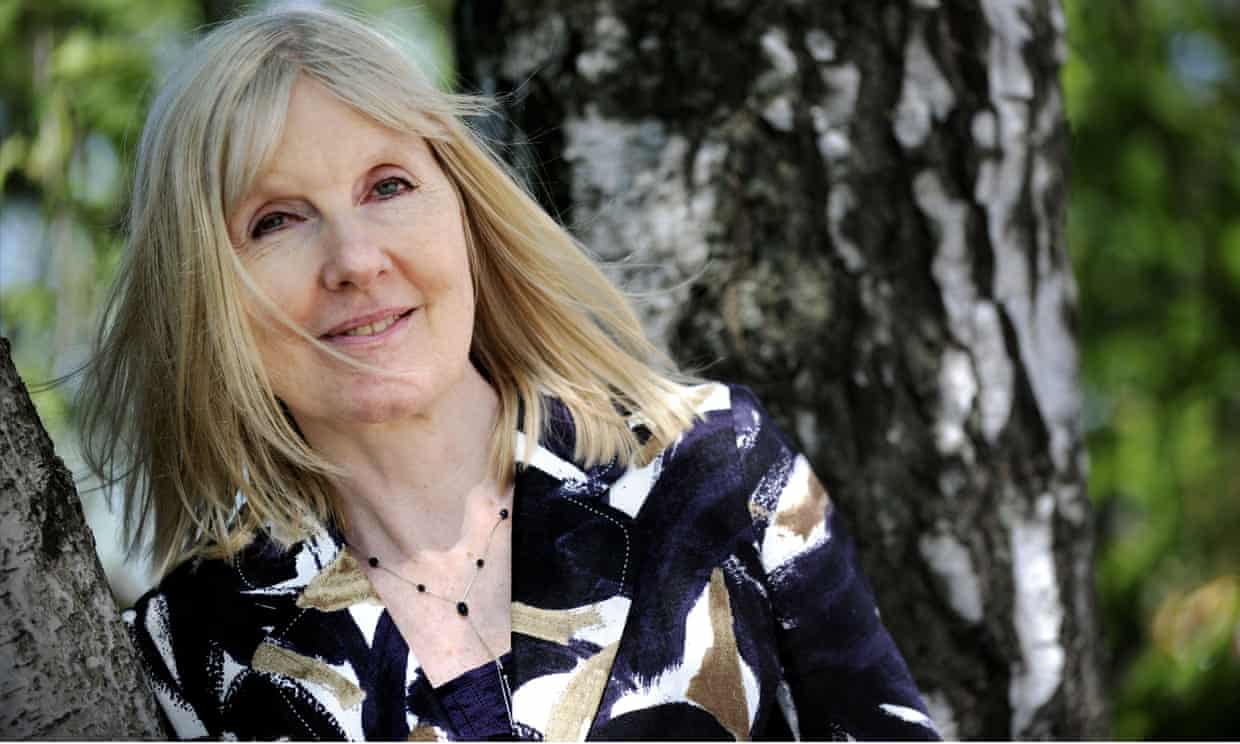
Helen Dunmore, pictured in 2009.
Helen Dunmore, posthumous winner of the Costa Book Award

Back in 2017, the various winners of the Costa Book Awards were announced.  Have a look through the various categories if you are looking for inspiration for Remedy reading.  The combined shortlist is here as well if you want to decide if the judges got it right.

This week saw the announcement of the overall winner, and the late Helen Dunmore's poetry collection Inside the Wave was judged the best of the best from 2017.  It is only the second time that this literary award has been awarded posthumously - Ted Hughes won for Birthday Letters back in 1998.

This collection was written in the last weeks of Dunmore's life, and takes her cancer diagnosis as its primary subject matter.  Have a look at the Guardian's coverage of the story for more details.

Jon McGregor's beautifully written twist on the modern thriller, Reservoir 13, didn't do enough in the judges' eyes to challenge Dunmore's poetry, but it is well worth a read.  You might also enjoy his first novel If No One Speaks of Remarkable Things (2002), if only for the extraordinary opening sequence.

If you do read anything marvellous over the holidays, please do let the book blog know about it.  We'd be delighted to publish anything as part of next half-term's books of the week.